
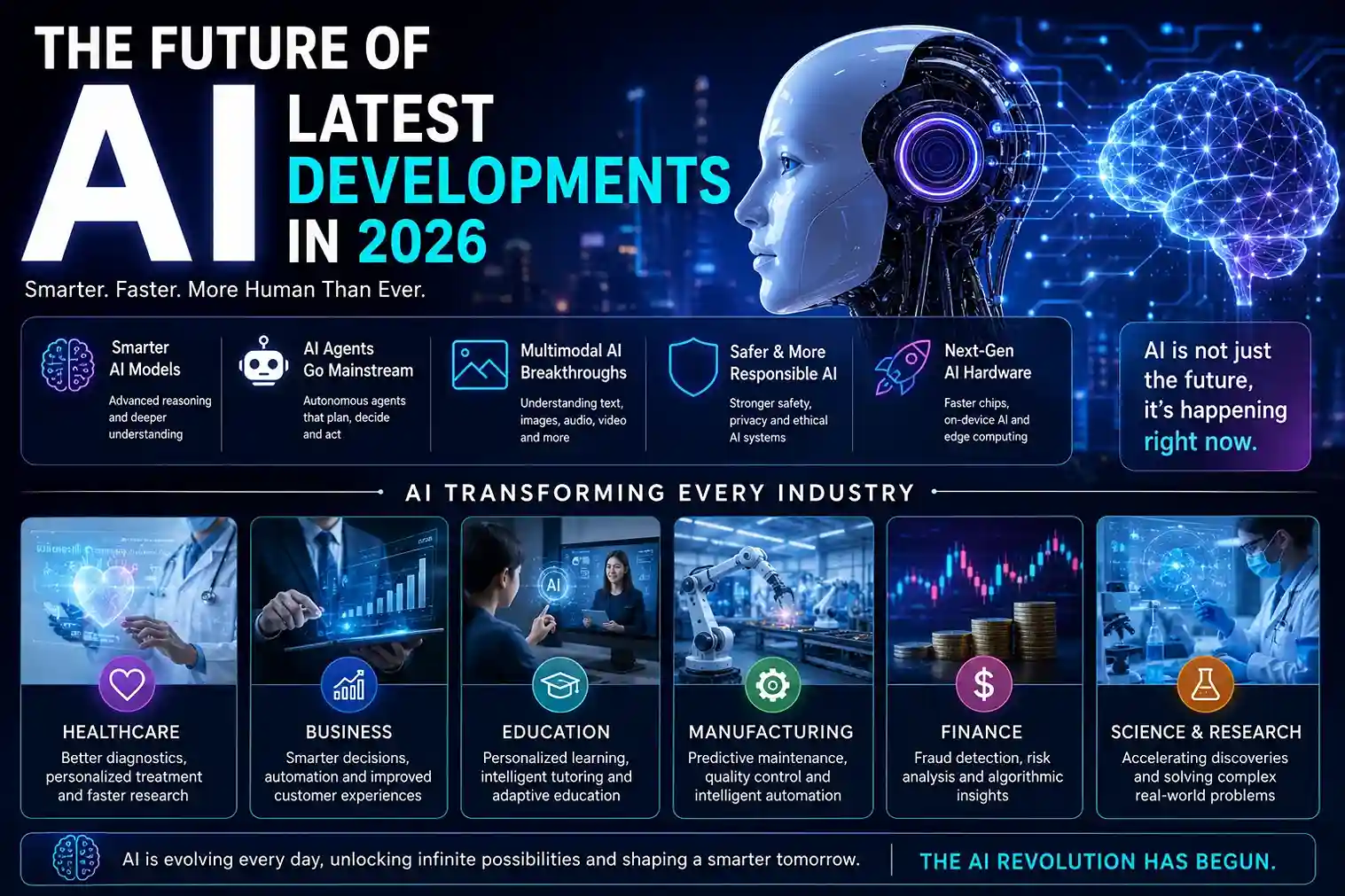
AI Technology in 2026: How Artificial Intelligence Is Changing the Future
Contents
Artificial Intelligence (AI) has become one of the most important technologies in the modern world. From smartphones and computers to healthcare, education, transportation and business, AI technology is changing how people live and work. In 2026, artificial intelligence continues to attract global attention as companies, governments, researchers and technology developers explore new ways to use intelligent systems.
AI is no longer just a concept found in science fiction movies. It is now part of everyday life. People use AI-powered applications to write content, translate languages, create images, analyse information, improve productivity and solve different problems.
As technology continues to develop, artificial intelligence is expected to play an even bigger role in the global economy and digital society.
1. What Is AI Technology?
Artificial Intelligence is a branch of computer science that focuses on developing machines and software capable of performing tasks that normally require human intelligence.
These tasks include learning, problem-solving, understanding language, recognising images, analysing data and making predictions.
AI systems use different technologies, including machine learning, deep learning, natural language processing and computer vision.
For example, when someone asks a question using an AI chatbot, the system analyses the request and generates a relevant response. Similarly, AI-powered recommendation systems suggest videos, products and music based on user interests.
The main objective of AI technology is to make digital systems more intelligent, efficient and useful.
2. Latest AI Technology Trends in 2026
The AI industry is developing rapidly, with new applications and innovations appearing across different sectors.
Some important AI technology trends include:
Generative AI: Generative AI tools can create written content, images, audio, videos and computer code. These tools are becoming increasingly useful for students, businesses, designers and content creators.
AI Agents: AI agents are designed to complete multiple connected tasks with limited human involvement. They can help organise information, manage workflows and support business operations.
Machine Learning: Machine learning allows computer systems to identify patterns in data and improve their performance through experience.
AI in Robotics: Intelligent robots are being developed for manufacturing, healthcare, logistics and other industries.
Multimodal AI: These systems can understand and work with different types of information, including text, images, audio and video.
These developments show how artificial intelligence is expanding beyond traditional computer applications.
3. AI Technology in Healthcare
Healthcare is one of the most promising areas for artificial intelligence.
Hospitals and medical researchers are exploring AI applications to support medical imaging, analyse health information, assist with administrative tasks and improve research.
AI-powered systems can help medical professionals examine X-rays, MRI scans and other medical images. They may identify patterns that require further investigation by qualified healthcare professionals.
Artificial intelligence is also being used in pharmaceutical research. It can help researchers analyse large datasets and investigate potential drug discoveries.
However, AI should support medical professionals rather than replace qualified doctors. Human judgement, patient safety and medical supervision remain essential.
4. AI Technology in Education
Artificial intelligence is transforming modern education by providing new learning opportunities.
AI-powered educational platforms can explain difficult subjects, generate practice questions, translate educational materials and provide personalised learning support.
Students can use AI tools to understand mathematics, science, economics, computer science and languages.
Teachers can also use artificial intelligence to prepare educational materials, organise information and support classroom activities.
However, students should not depend entirely on AI-generated answers. Independent thinking, creativity, research and practical understanding remain important parts of education.
5. AI Technology in Business and the Economy
Businesses around the world are adopting artificial intelligence to improve productivity and customer experiences.
AI-powered systems can analyse market trends, organise business information, support customer service and automate repetitive administrative tasks.
For example, online shopping platforms use AI-based recommendation systems to suggest products. Financial institutions use AI tools to analyse transactions and identify unusual patterns.
Small businesses can also benefit from AI technology. Entrepreneurs can use AI tools for marketing ideas, customer communication, content planning and data analysis.
As adoption increases, AI is likely to influence business competition and the global economy.
6. Benefits of Artificial Intelligence
Artificial intelligence offers several important advantages.
-
Improved productivity: AI can help complete repetitive tasks more efficiently.
-
Time savings: Automated systems can reduce the time required for certain activities.
-
Better data analysis: AI can examine large amounts of information and identify useful patterns.
-
Personalised services: Businesses can provide recommendations based on customer interests.
-
Educational support: Students can access explanations and learning assistance.
-
Innovation: AI supports research and the development of new technologies.
These benefits explain why organisations across different industries are investing in artificial intelligence.
7. Challenges and Risks of AI Technology
Despite its advantages, artificial intelligence also creates important challenges.
One major concern is data privacy. AI applications may process personal information, making responsible data protection essential.
Another challenge is misinformation. AI-generated images, videos and written content can sometimes spread misleading information.
Employment is another important issue. Automation may change certain job responsibilities, requiring workers to develop new skills.
AI systems can also produce inaccurate answers or reflect biases present in their training data.
Governments, technology companies and researchers must therefore work together to promote transparency, security, fairness and responsible AI development.
8. AI Technology and the Future of Employment
Artificial intelligence is expected to influence the future of employment.
Some repetitive tasks may become increasingly automated, while new opportunities may emerge in software development, data analysis, cybersecurity, robotics and AI management.
Workers may need to develop digital skills to remain competitive in a changing job market.
Students can prepare by learning computer programming, communication, analytical thinking and problem-solving.
The future workplace will likely involve greater cooperation between humans and intelligent computer systems.
9. The Future of AI Technology
The future of artificial intelligence looks promising, although its development will depend on technological progress, regulation and public trust.
Researchers are working to develop more capable, reliable and energy-efficient AI systems.
In the coming years, AI could become increasingly important in scientific research, smart transportation, environmental monitoring, agriculture and industrial production.
However, technological progress must be balanced with human values, safety and accountability.
Responsible development will be essential to ensure that artificial intelligence benefits society.
10. Conclusion
AI technology is one of the most influential developments of the modern digital era. It is changing healthcare, education, business, communication and employment while creating new opportunities for innovation.
In 2026, artificial intelligence continues to develop as businesses, governments and individuals explore its possibilities.
Although challenges such as privacy, misinformation, employment changes and system reliability remain important, responsible AI development can help society benefit from this technology.
Artificial intelligence is not simply a technology of the future. It is already shaping the present, and its influence is expected to grow in the years ahead.