
ICICI Bank Rules 2026: Latest Banking Rules, Charges, Minimum Balance and Account Guidelines
ICICI Bank is one of India’s leading private sector banks. Millions of customers use its banking services for savings accounts, money transfers, debit cards, credit cards, fixed deposits and digital payments. Understanding ICICI Bank rules is important for customers who want to manage their money safely and avoid unnecessary banking charges.
In 2026, customers should pay attention to account maintenance requirements, KYC updates, ATM transactions, digital banking security and service charges. These rules can vary depending on the type of bank account and the date on which it was opened.
In this article, we explain the important ICICI Bank rules that customers should know.
1. ICICI Bank Minimum Balance Rules
One of the most important banking requirements is maintaining the minimum monthly average balance in a savings account.
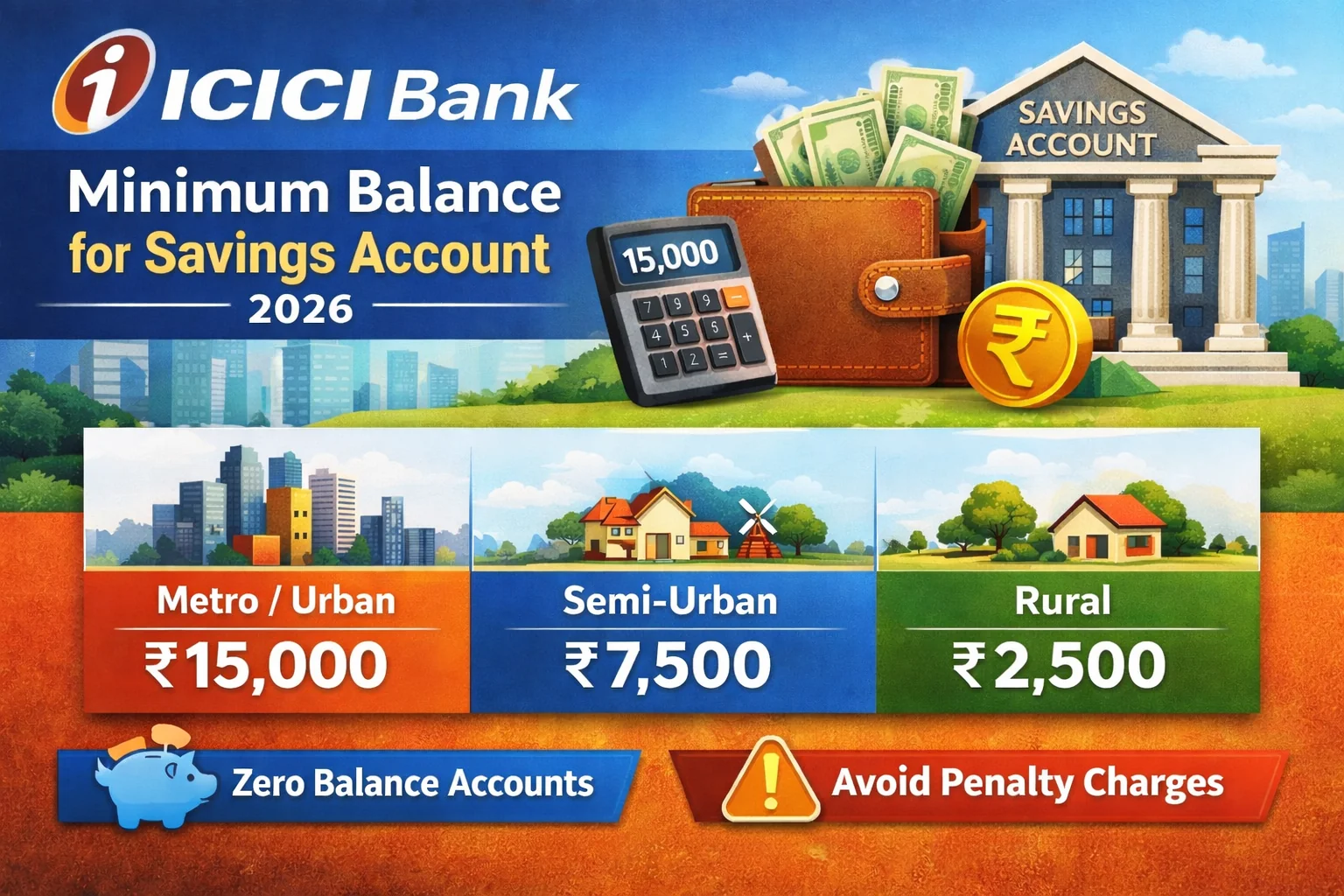
For new regular savings accounts opened on or after August 1, 2025, ICICI Bank specifies the following monthly average balance requirements:
– Metro and urban areas: ₹15,000
– Semi-urban areas: ₹7,500
– Rural areas: ₹2,500
Customers should understand that these requirements do not apply to every account. Existing savings accounts opened before August 1, 2025, salary accounts, certain student accounts, pension accounts and eligible special-category accounts have different conditions or exemptions.
According to ICICI Bank, the non-maintenance charge for applicable new accounts is 6% of the shortfall amount or ₹500, whichever is lower.
Therefore, customers should check their individual account terms before making financial decisions.
2. ICICI Bank KYC Rules
KYC means Know Your Customer. It is an important banking process used to verify the identity and address of customers.
Customers generally need to provide valid identity and address documents when opening an account.
Commonly accepted documents include:
– Aadhaar Card
– PAN Card
– Passport
– Voter ID
– Driving Licence
– Other valid documents accepted by the bank
Customers should keep their personal information updated with the bank. If the bank requests updated KYC documents, they should complete the verification through official banking channels.
KYC helps banks protect customer accounts and prevent fraudulent activities.
3. ICICI Bank ATM and Debit Card Rules
ICICI Bank provides debit cards that allow customers to withdraw cash, make payments and shop online.
However, debit card usage may involve certain conditions and charges.
Customers should remember these important points:
– Keep the debit card and PIN confidential.
– Never share OTPs with anyone.
– Check applicable ATM withdrawal limits.
– Understand charges for transactions beyond the free limits.
– Report a lost or stolen card immediately.
– Use official banking channels to block or manage cards.
ATM withdrawal limits and service charges may differ according to the debit card variant and account type.
Customers should check the latest official schedule of charges before using banking services.
4. ICICI Bank UPI and Online Payment Rules
Digital payments have become an important part of everyday banking in India. ICICI Bank customers can use UPI, mobile banking and internet banking for convenient transactions.
UPI allows customers to transfer money using a UPI ID, mobile number or QR code.
Important safety rules include:
– Never share your UPI PIN.
– Do not disclose OTPs to unknown callers.
– Check the recipient’s name before sending money.
– Avoid clicking suspicious payment links.
– Use the official iMobile app or trusted payment applications.
– Report unauthorised transactions immediately.
Remember that entering a UPI PIN is generally required to authorise a payment, not to receive money.
Customers should always be careful while making online payments.
5. ICICI Bank Dormant Account Rules
Customers who do not use their bank accounts for a long time should understand the inactive and dormant account rules.
According to ICICI Bank’s savings account FAQs:
– An account becomes inactive after 12 months without customer-initiated transactions.
– An account becomes dormant after 24 months of inactivity.
When an account becomes dormant, debit transactions such as withdrawals and transfers may be restricted.
However, the money in the account remains safe and continues to earn applicable savings account interest.
Customers can reactivate eligible accounts by completing the required re-KYC process through supported digital channels or by visiting a bank branch.
6. ICICI Bank Savings Account Rules
A savings account helps customers deposit money, earn interest and manage everyday expenses.
ICICI Bank offers different types of savings accounts, including regular savings accounts, salary accounts, student accounts, senior citizen accounts and basic savings bank deposit accounts.
Each account type may have different requirements.
Customers should check:
– Minimum balance conditions.
– Debit card charges.
– Account maintenance charges.
– Transaction limits.
– Applicable service fees.
– Interest rates.
A Basic Savings Bank Deposit Account (BSBDA) is designed for basic banking services without a minimum balance requirement, subject to applicable rules.
Customers should select an account according to their banking needs.
7. ICICI Bank Nominee Rules
A nominee is a person nominated by an account holder to receive the account balance according to applicable banking procedures after the account holder’s death.
Customers should consider adding a nominee to their savings accounts and keeping nomination information updated.
ICICI Bank provides nomination-related services through its digital banking channels and branches.
Customers should check their account records to ensure that the nomination details are correct.
8. ICICI Bank Digital Banking Security Rules
Digital banking makes financial transactions easier, but customers must follow basic security precautions.
Some important security guidelines are:
– Create a strong internet banking password.
– Never share your login credentials.
– Avoid accessing banking accounts through suspicious links.
– Do not install unknown applications claiming to provide banking support.
– Check account statements regularly.
– Use official ICICI Bank customer support for complaints.
If you notice an unauthorised transaction, contact your bank immediately and report the incident through the appropriate official channels.
9. Important ICICI Bank Charges and Fees
Banking services may involve different charges depending on the account type and services used.
Some common charges may include:
– Debit card annual fees.
– ATM transaction charges.
– Cheque-related charges.
– Account maintenance charges.
– Certain fund transfer or additional service charges.
ICICI Bank publishes its official schedule of service charges on its website.
Customers should always check the latest schedule because charges can change over time.
10. How to Stay Updated About ICICI Bank Rules
Banking rules and service charges may change from time to time. Customers should regularly check official announcements and account-related notifications.
Here are some useful ways to stay informed:
1. Visit the official ICICI Bank website.
2. Check the bank’s notice board.
3. Read SMS and email notifications from the bank.
4. Contact official customer support.
5. Visit your nearest ICICI Bank branch when necessary.
6. Review your account statement and applicable service charges.
Customers should never depend entirely on social media posts or unofficial websites for important banking information.
Conclusion
Understanding ICICI Bank Rules 2026 can help customers manage their accounts more effectively. Minimum balance requirements, KYC verification, debit card usage, UPI security, dormant account conditions and service charges are some of the most important banking topics.
However, all ICICI Bank accounts do not follow exactly the same rules. Requirements may depend on the account category, location and account opening date.
For accurate information, customers should always refer to ICICI Bank’s official website and the latest applicable terms and conditions before taking any banking decision.