
Reserve Bank of India (RBI): History, Functions, Rules and Importance in India
Contents
Introduction
The Reserve Bank of India (RBI) is the central bank of India. It plays an important role in managing the country’s banking and financial system. RBI controls the supply of money, manages monetary policy, regulates banks and helps maintain financial stability.
RBI is an important institution for India’s economy because it works to maintain price stability and support economic growth. It also supervises banking activities and protects public confidence in the financial system.
What Is the Reserve Bank of India (RBI)?
The Reserve Bank of India is India’s central banking institution. It is responsible for regulating the banking sector and managing the country’s monetary system.
RBI works with commercial banks, financial institutions and the Government of India. It also manages currency-related activities and supports safe digital payment systems.
The main objective of RBI is to maintain monetary stability while supporting the development of the Indian economy.
History of the Reserve Bank of India
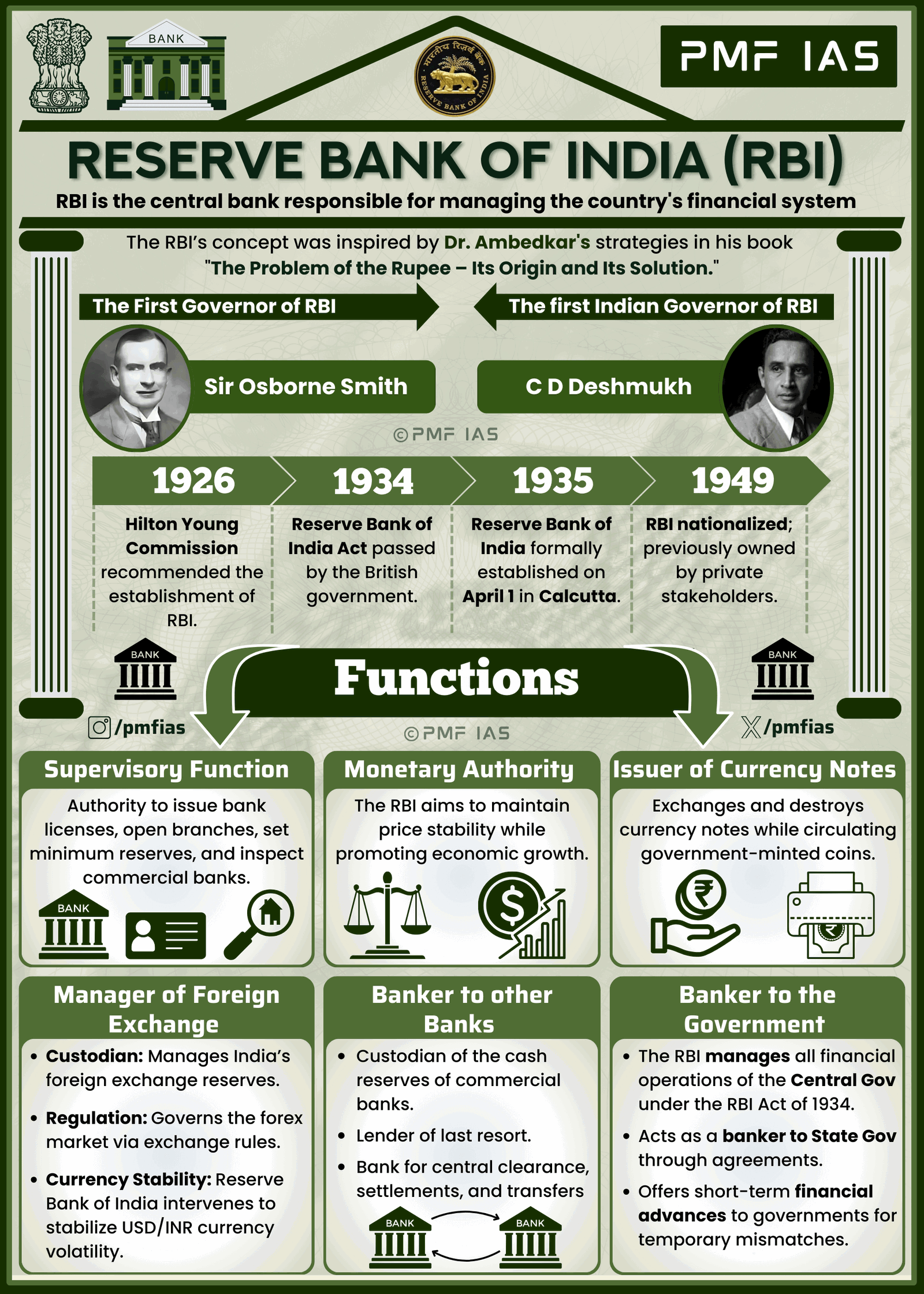
The Reserve Bank of India was established on 1 April 1935 under the Reserve Bank of India Act, 1934.
Initially, its Central Office was located in Kolkata. In 1937, the Central Office was permanently shifted to Mumbai.
At first, RBI was privately owned. However, it was nationalised on 1 January 1949 and became fully owned by the Government of India.
Since then, RBI has played an important role in India’s economic development and financial management.
Main Functions of RBI
RBI performs several important functions to maintain the stability of India’s financial system.
1. Monetary Policy
RBI formulates and implements India’s monetary policy. It uses monetary policy tools to influence interest rates, credit availability and money supply.
One of its major objectives is to control inflation while supporting economic growth.
2. Currency Issue
RBI manages the issue and circulation of banknotes in India, except the one-rupee note, which is issued by the Government of India.
It also manages the exchange and withdrawal of currency notes and ensures an adequate supply of good-quality notes.
3. Regulation of Banks
RBI regulates and supervises banks operating in India. It establishes banking rules and monitors financial institutions to maintain public confidence.
These regulations help protect depositors and support a stable banking system.
4. Foreign Exchange Management
RBI manages foreign exchange activities under the Foreign Exchange Management Act, 1999 (FEMA).
It helps maintain an orderly foreign exchange market and supports international trade and payments.
5. Banker to the Government
RBI works as a banker and financial adviser to the Central and State Governments.
It manages government banking transactions and supports government borrowing and public debt management.
6. Banker to Banks
RBI also acts as a banker’s bank. It maintains accounts of scheduled banks and provides important banking facilities to them.
It helps maintain stability and confidence in the banking system.
Important RBI Banking Rules and Guidelines
RBI issues various rules and guidelines to improve banking services and protect customers.
Some important areas covered by RBI regulations include:
- Savings and current account operations.
- Bank loan and interest-related regulations.
- Customer service and grievance redressal.
- Digital payment security.
- Know Your Customer (KYC) requirements.
- Banking fraud prevention.
- Deposit-related regulations.
- Responsible lending practices.
Customers should always check the latest official RBI guidelines because banking rules can change over time.
RBI and Digital Payments in India
Digital payments have become an important part of everyday life in India. People use UPI, mobile banking, internet banking, debit cards and other electronic payment methods.
RBI regulates and supervises payment and settlement systems to promote safe and efficient transactions.
It also works to improve public confidence in digital banking and payment services.
Customers should never share their ATM PIN, OTP, CVV or internet banking password with anyone. They should use official banking applications and websites for financial transactions.
Importance of RBI in the Indian Economy
RBI plays an important role in India’s economic development.
Its major contributions include:
- Maintaining monetary stability.
- Controlling inflation through monetary policy.
- Regulating commercial banks.
- Supporting secure payment systems.
- Managing foreign exchange reserves.
- Promoting financial inclusion.
- Supporting the government’s banking activities.
- Maintaining confidence in the financial system.
Without a strong central bank, maintaining stability and public confidence in the banking system would be difficult.
How to Check Official RBI Updates?
People can visit the official Reserve Bank of India website to find reliable information about banking rules, monetary policy, notifications, circulars and customer awareness.
Official website: https://www.rbi.org.in/
Always verify important banking information through official RBI announcements rather than depending on unverified social media posts.
Conclusion
The Reserve Bank of India is one of the most important financial institutions in the country. From regulating banks to managing monetary policy and supervising digital payments, RBI performs many responsibilities.
It helps maintain financial stability, supports economic growth and protects public confidence in India’s banking system.
Understanding RBI’s functions and banking guidelines can help people become more aware and responsible banking customers.
Disclaimer: This article is for general educational purposes only. Banking rules and regulations may change. Always check the latest official RBI notifications for accurate information.