
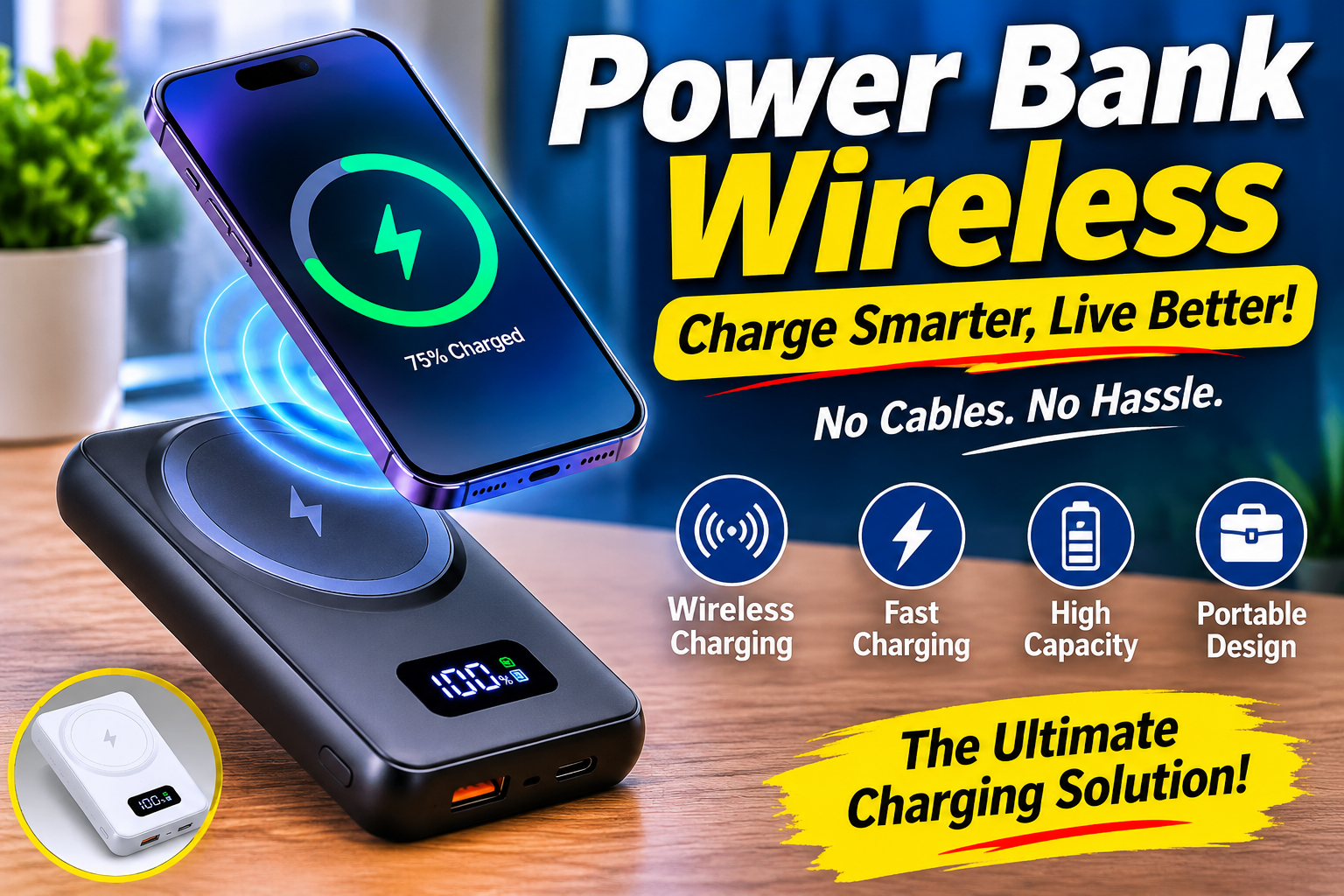
Wireless Power Bank: Features, Benefits and Buying Guide in 2026
Contents
Introduction
A wireless power bank is a useful smartphone accessory that allows users to charge their devices without connecting a traditional charging cable. As smartphones become more advanced, people need convenient and portable charging solutions for everyday use. A wireless power bank makes charging easier, especially when travelling, working outside or spending long hours away from home.
Unlike traditional power banks, wireless models can charge compatible smartphones by placing the phone on the charging surface. Some models also include USB ports, allowing users to charge devices through cables when needed.
In this article, we will explore wireless power banks, their features, benefits, charging technology and important buying tips.
What Is a Wireless Power Bank?
A wireless power bank is a portable battery device that provides power to smartphones and other compatible gadgets through wireless charging technology. It uses electromagnetic induction to transfer energy between the charger and the smartphone.
Users simply place a compatible phone on the wireless charging area. The charging process starts when the devices are properly aligned.
Many modern wireless power banks also support wired charging through USB-A or USB-C ports. This makes them useful for charging different types of electronic devices.
Important Features of Wireless Power Banks
1. Wireless Charging Support
The main feature of a wireless power bank is cable-free charging. Users do not need to connect a charging cable every time they want to charge their smartphones.
2. Portable Design
Most wireless power banks have a compact and lightweight design. They can easily fit inside a backpack, handbag or travel bag.
3. Multiple Charging Options
Many models support both wireless and wired charging. Users can charge compatible smartphones wirelessly and connect other devices through USB ports.
4. Magnetic Attachment
Some wireless power banks include magnetic attachment technology. Compatible smartphones can attach magnetically to the power bank, helping maintain the correct charging position.
5. Battery Capacity
Wireless power banks are available in different battery capacities, such as 5,000mAh, 10,000mAh and 20,000mAh. Higher capacity generally provides more stored energy, although actual charging performance depends on device compatibility and energy loss.
6. Safety Protection
Good-quality power banks may include protection against overheating, overcharging, overcurrent and short circuits. Buyers should always choose products from trusted manufacturers.
Benefits of Using a Wireless Power Bank
Wireless power banks offer several advantages for smartphone users.
Convenience: Users can charge compatible smartphones without connecting a cable.
Easy to Carry: Portable designs make them suitable for travelling, school, office and outdoor activities.
Less Cable Dependence: Wireless charging reduces the need to carry an additional charging cable for compatible phones.
Multiple Device Support: Some models support wireless charging and wired charging for different devices.
Useful During Travel: A wireless power bank can provide additional battery power when a wall charger is not available.
How Does Wireless Charging Work?
Wireless charging generally works through electromagnetic induction. The wireless power bank contains a transmitter coil, while a compatible smartphone contains a receiver coil.
When the smartphone is placed correctly on the charging surface, energy transfers between the coils. The smartphone then uses this energy to charge its battery.
Charging speed depends on the wireless charging standard, smartphone compatibility, power bank specifications and temperature.
Things to Check Before Buying a Wireless Power Bank
Before purchasing a wireless power bank, consider these important factors:
- Battery Capacity: Choose a capacity according to your daily charging requirements.
- Charging Speed: Check the supported wireless and wired charging speeds.
- Compatibility: Make sure your smartphone supports the power bank’s wireless charging standard.
- Magnetic Support: Check whether magnetic attachment is compatible with your phone.
- Safety Features: Look for overheating and overcharge protection.
- Build Quality: Choose a durable product from a reliable brand.
- Warranty: Check the manufacturer’s warranty and customer support.
Wireless Power Bank vs Traditional Power Bank
A traditional power bank usually requires a cable to charge a smartphone. A wireless power bank offers cable-free charging for compatible devices.
However, wireless charging can be less energy-efficient and may generate more heat than wired charging. Traditional wired charging can also provide faster charging depending on the supported specifications.
The best option depends on personal needs. Users who prefer convenience may choose wireless models, while users who prioritise charging speed may prefer wired power banks.
Are Wireless Power Banks Worth Buying?
Yes, wireless power banks can be a useful investment for people who own compatible smartphones and want convenient portable charging.
They are particularly useful for travel, outdoor activities and everyday mobile use. However, buyers should compare charging speed, capacity, compatibility and price before making a purchase.
Conclusion
A wireless power bank is a convenient and modern charging accessory for smartphone users. Its portable design, wireless charging support and multiple charging options make it useful in everyday life.
Before buying one, always check battery capacity, charging speed, safety features and smartphone compatibility. Choosing a reliable wireless power bank can help keep your smartphone charged whenever you need additional battery power.