
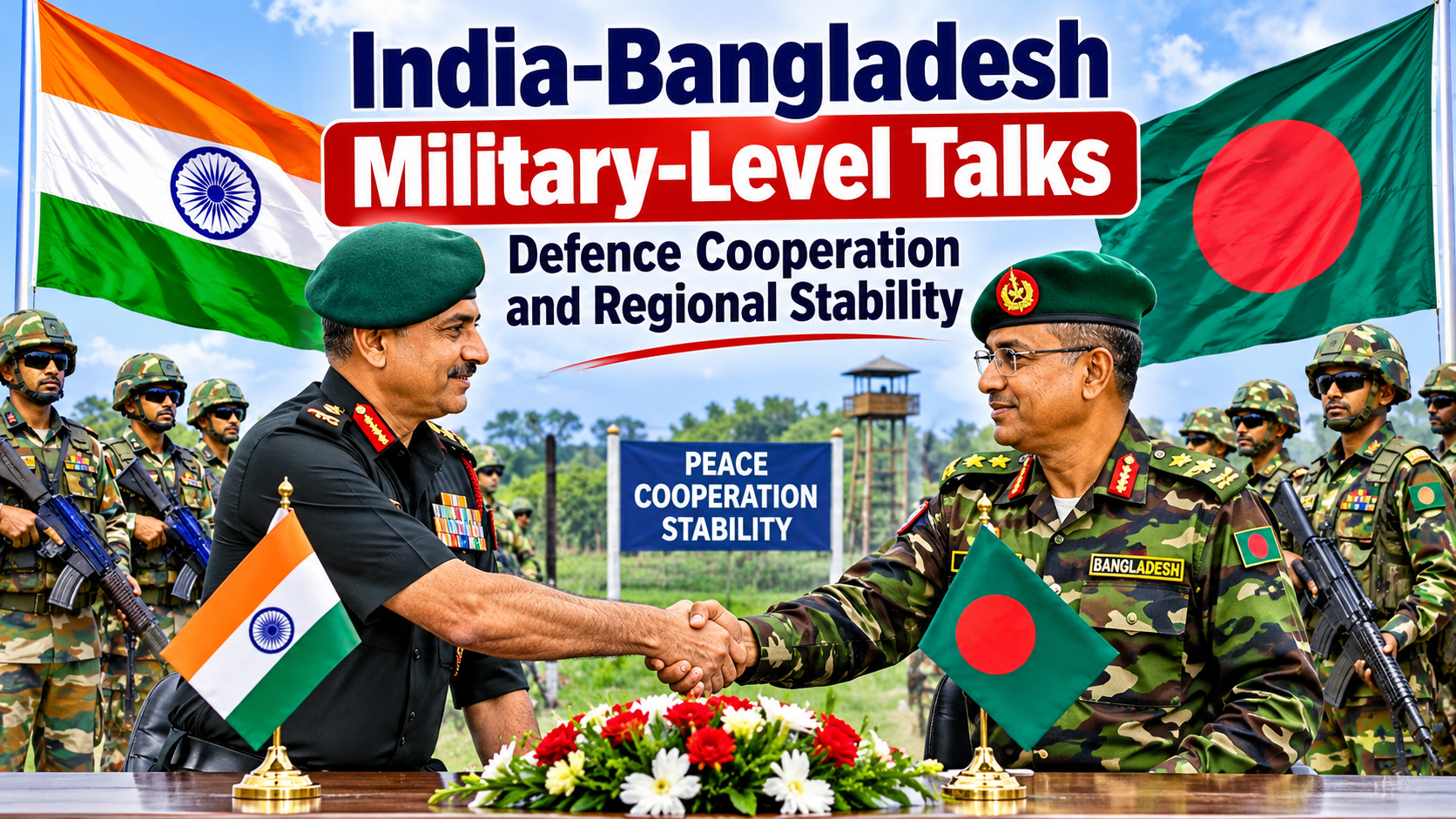
India-Bangladesh Military-Level Talks: Defence Cooperation, Border Security and Regional Stability
Contents
India and Bangladesh share a long-standing relationship based on geographical proximity, historical connections, trade, culture and regional security. Military and defence-level discussions between the two neighbouring countries are an important part of maintaining peace, strengthening communication and addressing common security concerns. Despite diplomatic challenges in recent years, both countries continue to recognise the importance of dialogue and cooperation in maintaining regional stability.
India-Bangladesh Military-Level Talks: Strengthening Defence Relations
India and Bangladesh have maintained various defence and security communication channels over the years. These discussions help both nations exchange views on regional security, professional military cooperation, training programmes, disaster management and maritime security. Military cooperation is also important for building confidence and improving coordination between the armed forces of neighbouring countries.
On 9 September 2026, Bangladesh and India expressed their commitment to strengthening bilateral defence cooperation and maintaining regional stability. The discussions took place during a meeting between Indian High Commissioner Dinesh Trivedi and Bangladesh’s Prime Minister’s Defence Adviser, Brigadier General (Retd) Dr AKM Shamsul Islam, in Dhaka. According to reports, the meeting covered joint military training, professional expertise, disaster management and maritime security.
Defence Cooperation Between India and Bangladesh
Defence cooperation is an important part of the relationship between India and Bangladesh. Both countries understand that communication between their military institutions can help improve trust, cooperation and regional stability.
Military-level engagement may include professional discussions, training exchanges, institutional cooperation and sharing experiences in areas of common interest. Such initiatives help military officials understand each other’s priorities and develop stronger professional relationships.
India has historically supported different forms of military cooperation with Bangladesh, including training and capacity-building programmes. Bangladesh also maintains relationships with several countries as part of its broader defence and foreign policy strategy.
Border Security and Cooperation
Border management is one of the most important subjects in India-Bangladesh relations. The two countries share a border of more than 4,000 kilometres, making regular communication between their border security organisations essential.
The Border Security Force (BSF) of India and Border Guard Bangladesh (BGB) regularly engage in discussions concerning border management, illegal crossings, smuggling, border incidents and other related matters.
In June 2026, the two border forces concluded a four-day director-general-level conference. Both sides reaffirmed their commitment to border peace, cooperation, information sharing and addressing cross-border crimes. The discussions also covered border-related concerns, infrastructure, confidence-building measures and coordination.
These discussions demonstrate the importance of communication and coordination in managing a sensitive international border. Cooperation between the two forces can help reduce misunderstandings and support peaceful relations between communities living near the border.
Maritime Security and Regional Stability
Maritime security is another important area of cooperation between India and Bangladesh. Both countries have interests in the Bay of Bengal, which is an important region for international trade, shipping, economic development and connectivity.
Cooperation in maritime security can involve discussions about safety at sea, regional stability, disaster response, maritime awareness and protecting economic interests. India and Bangladesh also have shared interests in maintaining a stable maritime environment.
Military and defence-level discussions can provide opportunities for officials to exchange professional knowledge and explore cooperation in areas that contribute to regional security.
Disaster Management and Military Training
Disaster management has become an important area of regional cooperation. India and Bangladesh are exposed to different natural challenges, including floods, cyclones and other emergencies.
Military organisations often play an important role in emergency response, evacuation, transportation, rescue coordination and relief operations. Cooperation and training in disaster management can improve preparedness and help both countries respond more effectively during emergencies.
Professional military exchanges can also contribute to the development of skills, experience and institutional understanding. These programmes can support broader bilateral cooperation while promoting mutual trust.
Diplomatic Challenges and the Future of Relations
Although India and Bangladesh continue to discuss cooperation, their bilateral relationship has also faced diplomatic challenges. Political disagreements, border concerns, trade-related issues, visa matters and water-sharing discussions have influenced the relationship between the two countries.
Recent diplomatic developments indicate that both governments continue to recognise the importance of maintaining communication. India has publicly expressed its interest in a positive, constructive and forward-looking relationship with Bangladesh, while both sides continue to use existing diplomatic mechanisms to discuss bilateral issues.
Military and defence communication can remain an important channel even when broader political relations face difficulties. Continued dialogue may help both countries manage disagreements and maintain cooperation on shared concerns.
Conclusion
India-Bangladesh military-level engagement is an important part of the broader bilateral relationship. Cooperation in professional military exchanges, border management, maritime security, disaster management and regional stability can help strengthen mutual understanding between the two neighbouring countries.
While political and diplomatic challenges remain, continued dialogue and cooperation can support peaceful relations. Both India and Bangladesh have important shared interests, and maintaining communication between their institutions remains essential for the future of regional stability.