
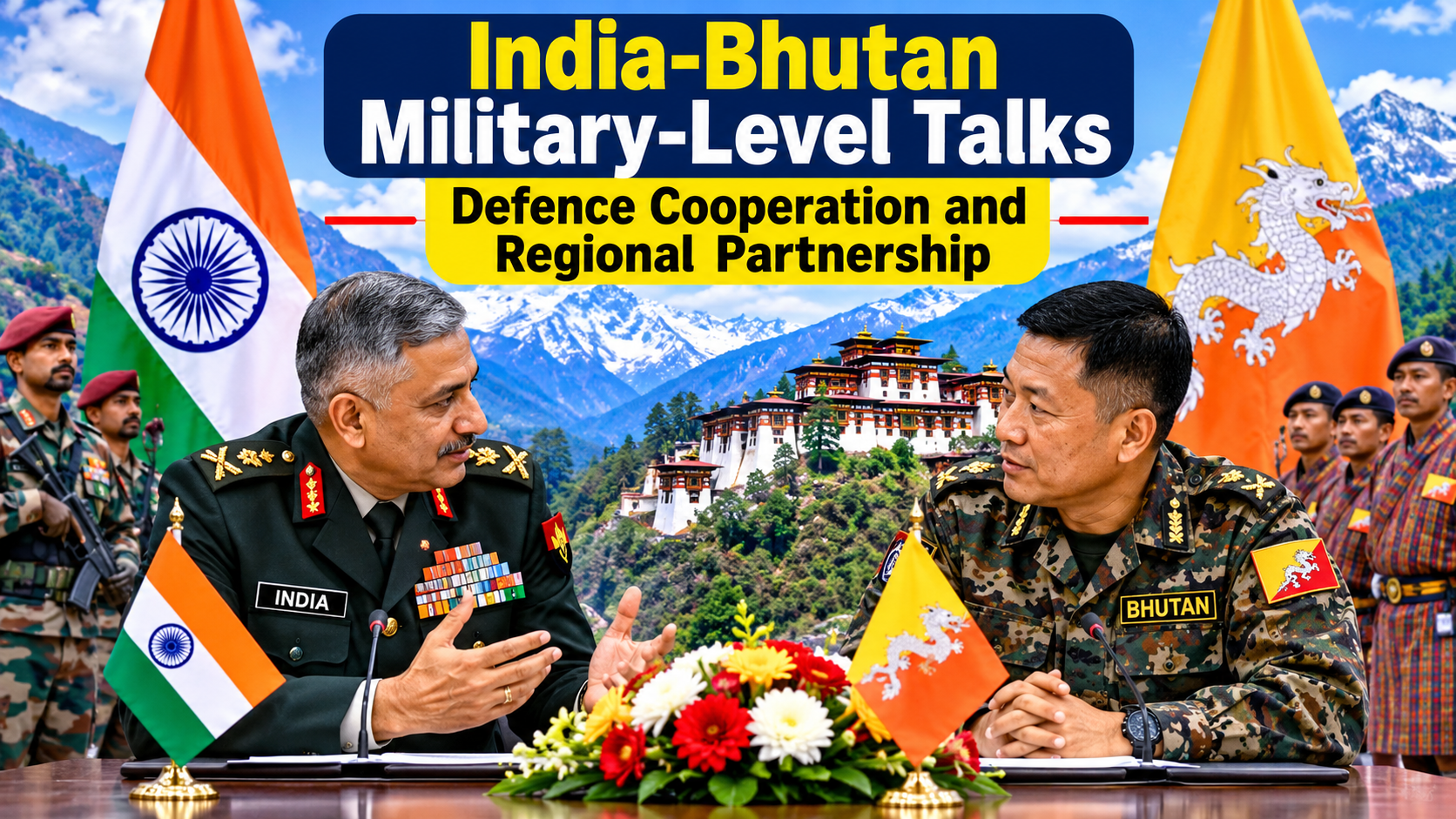
India-Bhutan Military-Level Talks: Strengthening Strategic Partnership and Border Cooperation
Contents
India and Bhutan share a long-standing relationship based on friendship, mutual trust, regional cooperation and security partnership. Military-level talks between the two countries play an important role in strengthening their defence cooperation, maintaining regional stability and improving coordination on matters of mutual interest. Both countries have maintained close diplomatic and security ties over the years, and defence discussions remain an important part of their bilateral relationship.
Military-level discussions between India and Bhutan are generally focused on defence cooperation, training, security coordination, border-related concerns, regional stability and the exchange of institutional knowledge. These engagements reflect the importance both nations place on peaceful cooperation and maintaining a stable Himalayan region.
India and Bhutan: A Strong Defence Relationship
India and Bhutan have developed a close partnership since the establishment of formal diplomatic relations in 1968. Their relationship has expanded across several areas, including education, trade, infrastructure, development, energy and defence. Both countries value cooperation and dialogue as important tools for maintaining peace and stability in South Asia.
Military-level talks are one of the important channels through which the two countries discuss defence-related cooperation. These meetings provide an opportunity for officials to exchange views, strengthen institutional relationships and discuss common regional interests. Such discussions also help maintain communication between the defence institutions of both countries.
Importance of India-Bhutan Military-Level Talks
Military-level talks between India and Bhutan are important because the two countries share geographical, cultural and strategic interests. Bhutan is located in the Himalayan region, making regional cooperation and peaceful relations significant for both nations.
Defence dialogue can help strengthen mutual understanding, improve communication and encourage cooperation in areas such as training, professional development and disaster preparedness. The meetings also provide an institutional platform for discussing broader regional developments.
The purpose of these engagements is not only to discuss defence matters but also to support a long-term relationship based on trust, respect and cooperation.
Defence Training and Professional Cooperation
India has historically supported Bhutan in various defence-related training and professional development initiatives. Training exchanges and educational opportunities can help strengthen the professional capabilities of personnel and encourage knowledge-sharing between institutions.
Professional cooperation may include leadership development, educational programmes, institutional exchanges and broader discussions about modern defence management. These initiatives contribute to the development of strong relationships between the two countries’ defence establishments.
Such cooperation reflects the wider partnership between India and Bhutan, which extends beyond military affairs and includes several development-oriented initiatives.
Regional Security and Himalayan Stability
The Himalayan region is important for regional stability, environmental protection, economic development and international relations. India and Bhutan have a shared interest in maintaining peaceful relations and supporting regional stability through dialogue and diplomatic cooperation.
Military-level talks can provide a platform for exchanging views on regional developments, emerging challenges and the importance of communication. Cooperation between neighbouring countries can help promote understanding and contribute to peaceful solutions to disagreements.
India and Bhutan also participate in broader regional discussions and diplomatic initiatives that promote cooperation, connectivity and economic development.
Cooperation Beyond Defence
The India-Bhutan relationship is not limited to military or security matters. Both countries cooperate in areas such as hydropower, infrastructure development, education, healthcare, digital connectivity and trade.
Hydropower cooperation has been one of the important pillars of their economic relationship. Bhutan’s energy resources and India’s demand for electricity have supported long-term cooperation in energy development and related infrastructure.
India has also supported Bhutan through development projects, technical assistance, educational programmes and other initiatives. These areas of cooperation strengthen the overall bilateral relationship and contribute to economic and social development.
The Future of India-Bhutan Relations
The future of India-Bhutan relations is expected to continue being shaped by dialogue, mutual understanding and cooperation. Military-level talks can remain an important part of the relationship by supporting institutional communication and encouraging cooperation in areas of common interest.
Both countries may continue to strengthen educational exchanges, professional cooperation, economic partnerships and development initiatives. Maintaining open communication and respecting mutual interests will remain important for their long-term partnership.
As regional developments continue to influence the Himalayan region, India and Bhutan’s close relationship remains an important example of cooperation between neighbouring countries.
Conclusion
India-Bhutan military-level talks represent an important aspect of the broader partnership between the two nations. Through defence dialogue, institutional cooperation, professional exchanges and diplomatic communication, both countries continue to support their longstanding relationship.
Their partnership is built on mutual trust, cooperation, respect and shared regional interests. Beyond defence, India and Bhutan continue to work together in energy, education, infrastructure, trade and development, making their relationship an important part of regional cooperation in South Asia.