
Paraguay Political Crisis 2026: What Happened?
Contents
Paraguay is experiencing one of its most significant political and financial crises in recent years. The South American country has entered a period of political uncertainty following the collapse of Ueno Bank, a major digital financial institution connected to the business interests of President Santiago Peña.
The banking crisis has affected millions of customers, triggered public demonstrations and created serious questions about financial regulation, government accountability and political leadership.
The situation became even more dramatic on November 5, 2026, when President Santiago Peña announced his resignation amid growing pressure from opposition parties, protesters and members of his own political party.
The crisis has attracted international attention because Paraguay was previously considered one of the relatively stable economies in South America. However, the banking collapse has raised concerns about the country’s financial institutions and political system.
1. Why Is Paraguay Facing a Political Crisis?
The main reason behind Paraguay’s political crisis is the collapse of Ueno Bank.
Ueno had developed into one of the country’s major digital banking institutions. It reportedly served approximately three million customers, representing a substantial share of Paraguay’s population.
The bank experienced serious financial difficulties, and the country’s central bank intervened after identifying problems with its minimum solvency requirements.
Following the intervention, customers faced difficulties accessing their accounts and savings. The situation created widespread concern among ordinary citizens, businesses and pensioners.
Many people depend on banking services for their salaries, daily expenses, savings and retirement payments. Therefore, the collapse created financial uncertainty for thousands of families.
The crisis quickly moved beyond the banking sector and became a major political issue.
Opposition politicians questioned how a financial institution connected to the president’s former business interests could expand so rapidly while facing concerns about its financial position.
These questions increased pressure on the government and contributed to demands for political accountability.
2. President Santiago Peña Resigns
One of the biggest developments in the Paraguay political crisis was the resignation of President Santiago Peña.
Peña announced his decision on November 5, 2026, as political pressure intensified following the Ueno Bank collapse.
His resignation came after opposition lawmakers began pursuing impeachment proceedings and members of his own conservative Colorado Party withdrew their support.
In his public statement, Peña said that his decision was guided by the need to protect national stability, social peace and democratic institutions.
However, he also indicated that he intended to defend himself against the allegations raised during the political proceedings.
The resignation marked a major turning point in Paraguay’s political situation. A president elected in 2023 was now leaving office before completing his term, creating an important leadership transition.
The country’s political institutions were expected to manage the transfer of power according to constitutional procedures.
3. Ueno Bank Collapse: The Main Reason Behind the Crisis
The Ueno Bank collapse is at the centre of the ongoing political controversy.
The financial institution grew rapidly and became an important part of Paraguay’s banking system. Its digital services attracted millions of customers.
However, the central bank eventually intervened after identifying a serious capital shortfall.
The situation became particularly sensitive because Ueno reportedly managed approximately $800 million to $850 million in public funds, including money connected to government institutions and pension-related entities.
This raised questions about the country’s financial supervision system.
Authorities now face the difficult task of protecting customers, investigating the bank’s financial activities and determining how deposits can be returned.
According to reports, depositors could receive protection through the country’s deposit guarantee arrangements, although the process and recovery of larger balances remain important concerns.
The bank’s collapse also affected public confidence in digital banking services.
For many customers, the crisis was not simply about a financial institution failing. It was about whether their savings and financial security were properly protected.
4. Public Protests Across Paraguay
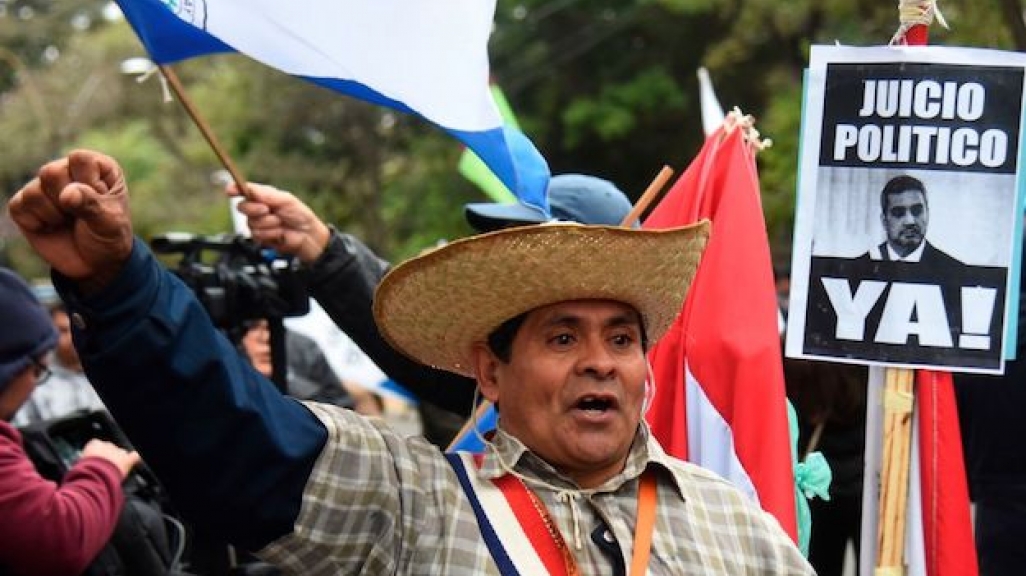
The banking crisis triggered demonstrations in Paraguay, particularly in the capital city of Asunción.
Thousands of people reportedly participated in protests as customers demanded access to their money and called for accountability.
Many protesters expressed frustration over the difficulties they faced after the bank’s services were suspended.
The demonstrations continued for several days and increased political pressure on the government.
Public anger was also directed towards the country’s financial regulators and political leadership.
People wanted answers to several important questions:
-
Why did the bank collapse?
-
How were public funds exposed to financial risks?
-
Why were customers unable to access their savings?
-
Who should be held responsible for the crisis?
-
How quickly can depositors recover their money?
These questions became central to the national political debate.
The protests demonstrated how a financial crisis can quickly develop into a broader political emergency when public confidence in institutions declines.
5. Impeachment Proceedings Against Santiago Peña
The political situation became more complicated when lawmakers moved towards impeaching President Santiago Peña.
Opposition politicians accused the president of potential conflicts of interest and questioned his previous business connections with the group associated with Ueno Bank.
Peña had previously held shares in the business group connected to the bank but stated that he had sold his stake in March 2025.
He denied wrongdoing and maintained that the allegations should be addressed through the appropriate legal processes.
On November 5, the lower house moved forward with impeachment proceedings.
According to reports published on November 6, the Chamber of Deputies voted 78-0 to impeach Peña after his resignation announcement. The case was then sent to the Senate, where further constitutional proceedings were required.
The extraordinary vote demonstrated how seriously the political establishment had turned against the president.
The Economic Times+1
6. Who Could Become the Next President of Paraguay?
Following Peña’s resignation, Vice President Pedro Alliana emerged as the expected successor.
According to reports, Alliana was expected to assume the presidency and complete the remaining period of Peña’s term, which runs until August 2028.
His immediate responsibility would be to manage the political transition and restore public confidence.
The new leadership would also face several major challenges:
-
Restoring confidence in Paraguay’s banking system.
-
Protecting the interests of ordinary depositors.
-
Investigating the circumstances surrounding Ueno Bank’s collapse.
-
Improving financial supervision and transparency.
-
Addressing public concerns about government accountability.
-
Maintaining economic and political stability.
The success of the transition will depend on how effectively the authorities respond to these challenges.
7. Economic Impact of the Paraguay Political Crisis
The political crisis could have important consequences for Paraguay’s economy.
Before the banking collapse, Paraguay was considered an attractive destination for investors because of its economic performance and relative political stability.
However, the sudden failure of a major financial institution and the resignation of the president have created uncertainty.
The financial markets have already reacted to the developments.
Reuters reported that Paraguay’s currency weakened significantly against the US dollar during the turmoil, while government bond prices also declined.
These developments demonstrate how political instability can influence investor confidence.
Businesses may become more cautious about investment decisions, while international investors could demand stronger guarantees before committing additional capital.
The government will need to demonstrate that Paraguay’s financial system remains capable of protecting deposits and supporting economic activity.
Maintaining confidence among domestic and international investors will be an important part of the country’s recovery.
8. International Attention on Paraguay
The Paraguay political crisis has attracted international attention because of its potential impact on regional economic confidence.
Political stability is important for countries seeking foreign investment, international trade opportunities and long-term economic development.
The collapse of a major bank and the resignation of a sitting president have created questions about Paraguay’s financial governance.
International observers will be watching how the new administration handles the banking investigation and the political transition.
The crisis may also encourage discussions about stronger financial regulations, transparent public-sector investments and better protection for bank customers.
For other developing economies, Paraguay’s experience highlights the importance of effective banking supervision and independent regulatory institutions.
9. What Happens Next in Paraguay?
The coming weeks will be extremely important for Paraguay.
The immediate priority will be protecting customers affected by the Ueno Bank collapse.
Authorities will need to explain how deposits will be recovered and how public funds will be protected.
The political transition will also require careful management.
The new administration must address public concerns while ensuring that government institutions continue functioning normally.
Investigations into the bank’s financial activities could reveal additional information about the causes of the collapse and whether any laws were violated.
At the same time, the Senate’s role in the impeachment process and the formal handling of Peña’s resignation will remain important constitutional issues.
The outcome could influence Paraguay’s political future and public confidence in its democratic institutions.
Conclusion: Paraguay Faces a Major Political Turning Point in 2026
The Paraguay political crisis of 2026 is a major development in South American politics.
The collapse of Ueno Bank, public protests, questions about government accountability and President Santiago Peña’s resignation have created an extraordinary situation.
The country now faces the challenge of restoring confidence in its banking system and political leadership.
The expected transition to Vice President Pedro Alliana could provide an opportunity to stabilise the government and introduce stronger financial safeguards.
However, the long-term outcome will depend on transparent investigations, effective financial reforms and the government’s ability to protect ordinary citizens.
Paraguay’s experience demonstrates that financial instability can quickly become a national political crisis when public trust is weakened.
The coming months will determine whether the country can overcome this difficult period and restore confidence among its citizens and international investors.