
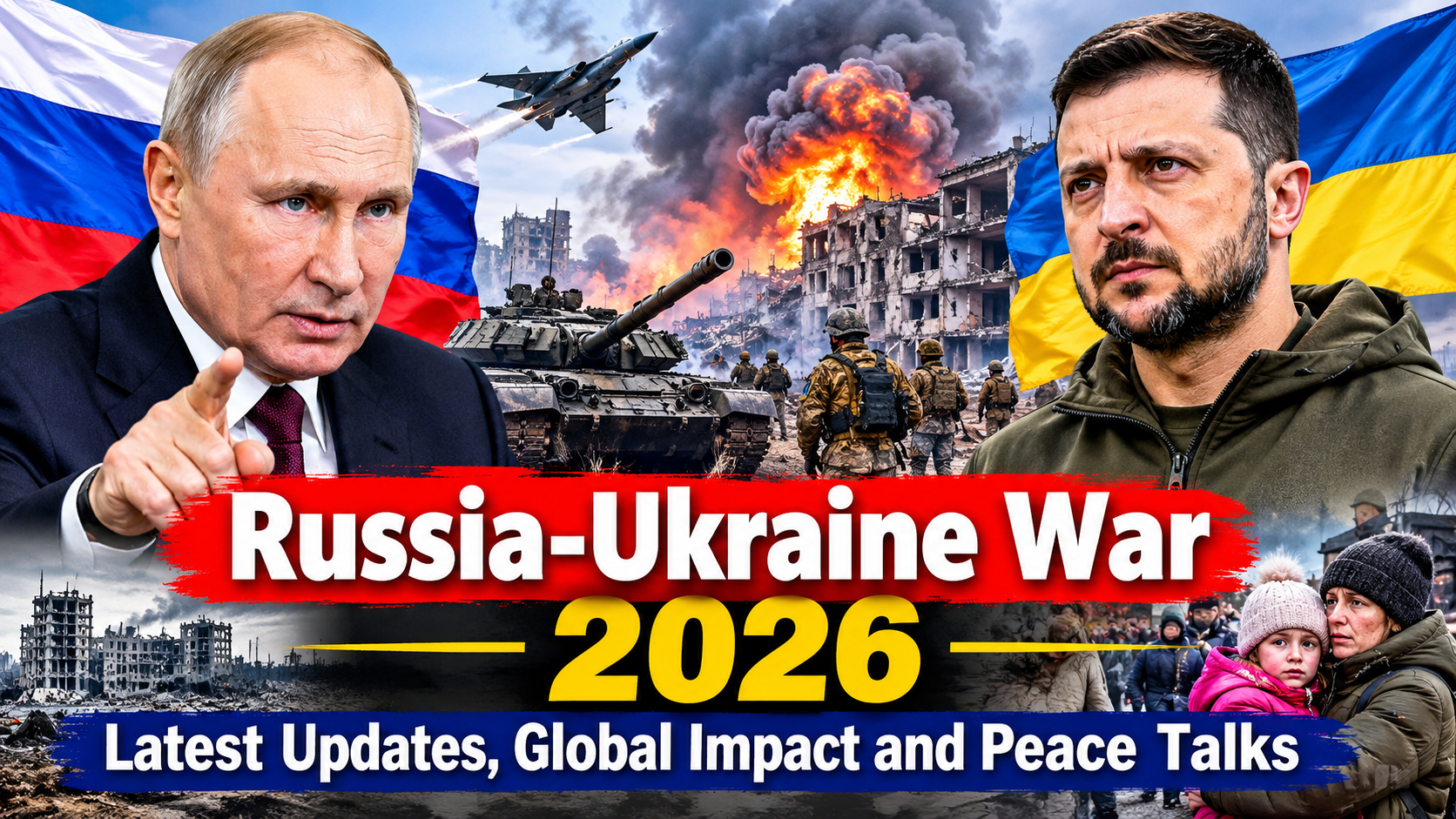
Russia-Ukraine War 2026: Latest Updates, Global Impact and Peace Negotiations
Contents
The Russia-Ukraine war remains one of the most important international conflicts in the world in November 2026. More than four years after Russia launched its full-scale invasion of Ukraine in February 2022, fighting continues across several regions. The conflict has affected millions of people, damaged important infrastructure and created major political and economic challenges for countries around the world.
Despite international diplomatic efforts, a permanent peace agreement has not yet been reached. Both countries continue to face military, economic and humanitarian challenges, while international leaders are discussing possible solutions to end the war.
Recent developments have also brought renewed attention to peace negotiations involving the United States, Ukraine and Russia. However, major disagreements remain over security guarantees, territorial questions and the future relationship between the two countries.
Latest Russia-Ukraine War News in November 2026
The conflict continues to experience intense fighting along several sections of the frontline. According to a November 6 report from Ukraine’s General Staff, 188 combat engagements were recorded during the previous 24 hours.
The Pokrovsk direction remained one of the areas experiencing significant Russian military pressure. Ukrainian officials also reported continued airstrikes, drone attacks and artillery shelling across different regions.
Both countries have continued reporting attacks involving drones and other long-range systems. These developments demonstrate that the conflict remains active despite discussions about diplomatic solutions.
Military situation reports should be treated carefully because information released by the two sides may differ and cannot always be independently verified.
Background of the Russia-Ukraine Conflict
The roots of the Russia-Ukraine conflict go back several years before the full-scale invasion of 2022.
In 2014, Russia annexed Crimea, a move rejected by Ukraine and most of the international community. Fighting also began in eastern Ukraine, particularly in the Donetsk and Luhansk regions.
Relations between Moscow and Kyiv continued to deteriorate over political disagreements, security concerns and Ukraine’s relationship with Western countries.
On February 24, 2022, Russia launched a full-scale invasion of Ukraine. Russian forces entered Ukrainian territory from multiple directions, beginning a major European conflict that attracted worldwide attention.
Ukraine resisted the invasion and received significant financial, humanitarian and military assistance from Western governments.
Since then, the conflict has developed into a prolonged war with serious consequences for international security.
Role of Vladimir Putin and Volodymyr Zelenskyy
Russian President Vladimir Putin and Ukrainian President Volodymyr Zelenskyy remain two central figures in the conflict.
Putin has defended Russia’s military actions by referring to Russian security interests and Moscow’s political objectives. Ukraine and many Western governments reject these justifications and consider the invasion a violation of Ukrainian sovereignty.
President Zelenskyy has continued to demand the protection of Ukraine’s independence and internationally recognised territorial integrity. His government has also called for international security guarantees to prevent another Russian attack in the future.
Their political positions remain important obstacles to reaching a comprehensive peace agreement.
Peace Negotiations and International Diplomacy
Diplomatic discussions have become increasingly important as the war continues.
Recent reports on November 6 indicate that US representatives, European officials and Ukrainian leaders have been discussing security guarantees, reconstruction and financial support for Ukraine.
The United States has also indicated that trilateral discussions involving Russia, Ukraine and the United States could take place in Abu Dhabi.
However, a meeting or diplomatic announcement does not automatically mean that a peace agreement is close.
Ukraine wants reliable international guarantees that its security will be protected after the war. Russia and Ukraine also remain divided over territorial and political issues.
European governments have emphasised that any lasting settlement must address Ukraine’s security and the wider stability of Europe.
The coming diplomatic discussions could become important, but their actual results will depend on the positions taken by all participating governments.
Humanitarian Crisis and Civilian Impact
The humanitarian consequences of the Russia-Ukraine war have been extremely serious.
Millions of Ukrainians have been displaced from their homes. Many families have moved to other parts of Ukraine, while millions more have sought refuge in European and other countries.
Residential buildings, hospitals, schools, roads and electricity infrastructure have suffered extensive damage.
According to United Nations humanitarian reporting, millions of people continue to require assistance, including food, healthcare, housing and protection.
Children, older people and families living close to frontline areas face particularly difficult conditions.
Repeated attacks on energy infrastructure have also created problems with electricity, heating and water supplies.
The humanitarian situation demonstrates why protecting civilians and ensuring access to essential services must remain international priorities.
Economic Impact of the War
The conflict has affected not only Russia and Ukraine but also the global economy.
Ukraine has experienced major damage to its agricultural sector, industrial facilities, transport networks and energy infrastructure. Rebuilding these sectors will require substantial financial resources and international cooperation.
Russia has also faced economic pressure from international sanctions, restrictions on trade and changes in its economic relationships with other countries.
The war has influenced international energy markets, food supplies and transportation costs.
Ukraine is an important agricultural producer and exporter. Disruptions to its production and exports have created challenges for international food markets, particularly in countries that depend on imported grain and agricultural products.
The conflict has also encouraged European countries to reconsider their energy security strategies and reduce dependence on particular external suppliers.
International Reactions to the Conflict
The international community remains divided over the Russia-Ukraine war.
The United States and several European countries have supported Ukraine through financial assistance, diplomatic action and security cooperation.
The European Union has also introduced sanctions against Russia and provided economic and humanitarian support to Ukraine.
At the United Nations, officials have repeatedly called for respect for international law, civilian protection and diplomatic efforts to end the fighting.
Countries such as India have generally emphasised dialogue, diplomacy and a peaceful resolution while maintaining their own international relationships.
Different countries have different economic and strategic interests, making it difficult to develop a single international approach to the conflict.
What Could Happen Next?
The future of the Russia-Ukraine war remains uncertain.
Several factors could influence developments in the coming months, including battlefield conditions, international financial support, diplomatic negotiations and the political decisions of both governments.
A successful peace agreement would require difficult discussions about security, territory, reconstruction and future international relations.
Even if a ceasefire is achieved, rebuilding Ukraine and addressing the humanitarian consequences could take many years.
International organisations and governments will also need to support displaced families and restore essential public services.
For now, the possibility of further fighting cannot be ruled out.
Conclusion
The Russia-Ukraine war in November 2026 continues to shape international politics, economic conditions and European security. Despite ongoing diplomatic efforts and discussions about possible negotiations, fighting and humanitarian difficulties remain serious concerns.
The planned diplomatic discussions involving Russia, Ukraine and the United States could provide another opportunity to explore a peaceful solution. However, lasting peace will require meaningful negotiations, credible security arrangements and respect for international law.
The world continues to watch developments closely, hoping that diplomatic efforts will eventually bring an end to the conflict and allow millions of affected people to rebuild their lives.