
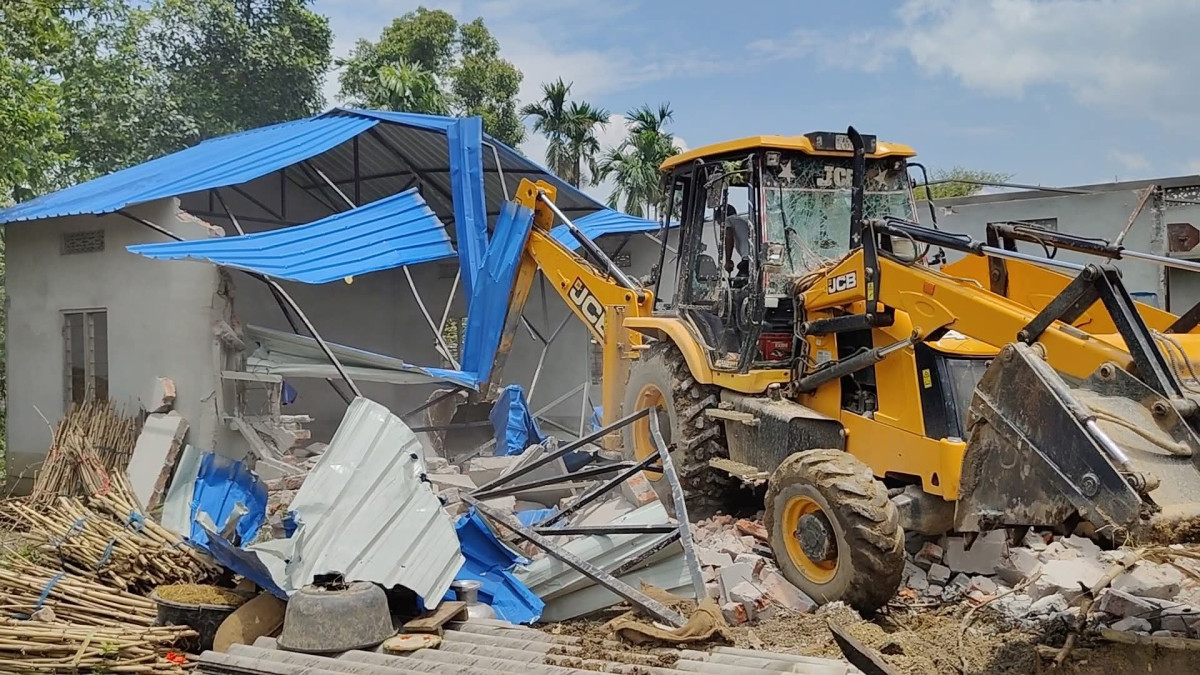
Dhubri Eviction Drive 2026: Major News from Alamganj, Mazar and Graveyard Issue
Contents
The major eviction drive in Assam’s Dhubri district has become one of the biggest regional news stories. On November 1, 2026, the district administration carried out a large-scale eviction operation in Alamganj Part-IX under the Gauripur Revenue Circle. The operation focused on approximately 650 bighas of government land allegedly occupied by families.
The eviction also attracted attention because of concerns surrounding a local mazar (shrine), an adjoining graveyard and other religious places. Questions about the future of affected families, religious structures, legal proceedings and possible rehabilitation have become important topics following the operation
Dhubri Eviction Drive 2026: Alamganj Mazar, Graveyard and Major Assam News
Introduction
Assam’s Dhubri district has witnessed a major eviction operation in Alamganj Part-IX, creating widespread discussion across the state. The eviction drive was conducted on November 1, 2026, by the district administration to clear approximately 650 bighas of government land. Hundreds of families were affected, and the operation attracted significant attention because of the presence of religious structures, including a local mazar and an adjoining graveyard.
The operation was conducted under the Gauripur Revenue Circle. According to officials, the land had been identified as government khas land and was allegedly occupied by several families. The administration said that notices had been issued before the eviction operation.
Major Eviction Operation in Alamganj, Dhubri
On November 1, the Dhubri district administration launched a large-scale eviction operation in Alamganj Part-IX. Several excavators, tractor-trolleys and heavy machinery were deployed to clear the identified land.
Dhubri District Commissioner Dibakar Nath stated that approximately 800 bighas of land had been identified in the area. Around 700 families had received eviction notices. However, the administration proceeded with the operation on approximately 650 bighas.
The remaining 150 bighas were excluded because some affected residents had approached the court seeking legal relief. Officials said that the administration would respect the court proceedings before taking further action.
According to reports, around 550 families were affected by the operation, although some media reports provided higher estimates. The administration said that many residents had already removed their belongings and dismantled their houses before the eviction began.
Alamganj Mazar and Graveyard Become a Major Issue
One of the most discussed aspects of the Dhubri eviction drive is the local mazar and its adjoining graveyard.
During the operation, concerns were raised about the possible impact on religious structures. According to The Sentinel’s report, the administration did not proceed with the eviction of the mazar and adjoining graveyard immediately. This followed a request from the local committee for discussions with the authorities.
There was also a reported incident involving a vehicle that struck the mazar, after which local residents gathered at the location. The matter was subsequently addressed through discussions with members of the local committee.
District Commissioner Dibakar Nath indicated that further steps concerning the religious structure would be taken according to the law after consultation.
The issue has attracted attention because religious places and graveyards hold considerable importance for local communities. Residents are concerned about protecting religious sites while the administration maintains that government land must be cleared according to legal procedures.
Around 550 Families Affected by the Eviction
The eviction operation has raised serious questions about the future of affected families.
According to official statements reported by the media, approximately 550 families were affected by the operation. Other reports have given different estimates of the number of families and residents affected.
Several residents reportedly started shifting their household belongings before the operation. Some families moved to nearby locations, while others reportedly took shelter with relatives or made temporary arrangements.
The situation has created uncertainty for families who may not have alternative accommodation or sufficient financial resources to establish new homes.
Some residents have also claimed that they purchased land from private individuals and were unaware that the property was government land. These claims have added another dimension to the discussion surrounding land ownership and documentation.
Why Did the Assam Government Conduct the Eviction?
According to the district administration, the main objective was to recover government khas land from alleged encroachment.
Dhubri District Commissioner Dibakar Nath also indicated that the administration had considered the possibility of making the land available for an industrial park. However, further decisions about the proposed development would depend on the state government’s directions.
The administration has maintained that identifying government land, issuing notices, conducting hearings and examining documents are important parts of the eviction process.
The issue of land availability and industrial development is significant for Dhubri because new industries could potentially create employment opportunities and improve economic activities in the region.
However, development plans also need to consider the situation of people affected by land-clearance operations.
Court Cases and the November 13 Hearing
Another important development concerns the legal proceedings involving some affected families.
Approximately 150 bighas of land were excluded from the November 1 operation because certain occupants had approached the Gauhati High Court for relief.
According to reports, the next hearing concerning these matters is scheduled for November 13, 2026.
The district administration has indicated that it will follow the court’s directions before proceeding with further action involving the disputed land.
This development is important because the legal status of the remaining land could influence the next stage of the eviction process.
Residents involved in the cases will be looking for clarity through the judicial process.
Rehabilitation and Temporary Shelter for Displaced Families
Rehabilitation has become another important question following the Alamganj eviction.
The district administration has reportedly identified two possible locations, Boyjer Alga and Chirakhowa, as temporary shelter options for families who become completely landless because of eviction operations.
However, officials have clarified that these arrangements would provide interim relief rather than permanent land-for-land rehabilitation.
Some affected families reportedly have alternative places to move, while others may need assistance from relatives or temporary accommodation.
The availability of safe shelter, drinking water, sanitation, healthcare and educational facilities will remain important concerns for displaced residents.
What Happens Next in Dhubri?
The next major development will depend on the court proceedings scheduled for November 13 and further decisions by the district and state administrations.
The local mazar and adjoining graveyard issue also requires attention following discussions between the administration and the local committee.
Meanwhile, the affected families will be looking for clarity regarding their accommodation and future arrangements.
The proposed industrial development of the area may also become an important subject of discussion in the coming months.
Conclusion
The Dhubri eviction drive in Alamganj Part-IX has become a major news development in Assam. The recovery of approximately 650 bighas of government land, the displacement of hundreds of families, the discussion surrounding the local mazar and graveyard, and the pending court proceedings have made the issue particularly significant.
While the administration has stated that the operation was conducted to recover government land, questions about rehabilitation, religious structures and the future of affected residents remain important.
The November 13 court hearing and further administrative decisions will be important developments to watch. The situation highlights the need to balance lawful land administration, development objectives, religious-site protection and the concerns of affected families.
Disclaimer: This article is based on media reports and official statements available as of November 3, 2026. Figures reported by different media outlets may vary. Further developments should be checked against official district administration statements and court orders.