
European Flight Disruption 2026: What Is Happening Across Europe?
Contents
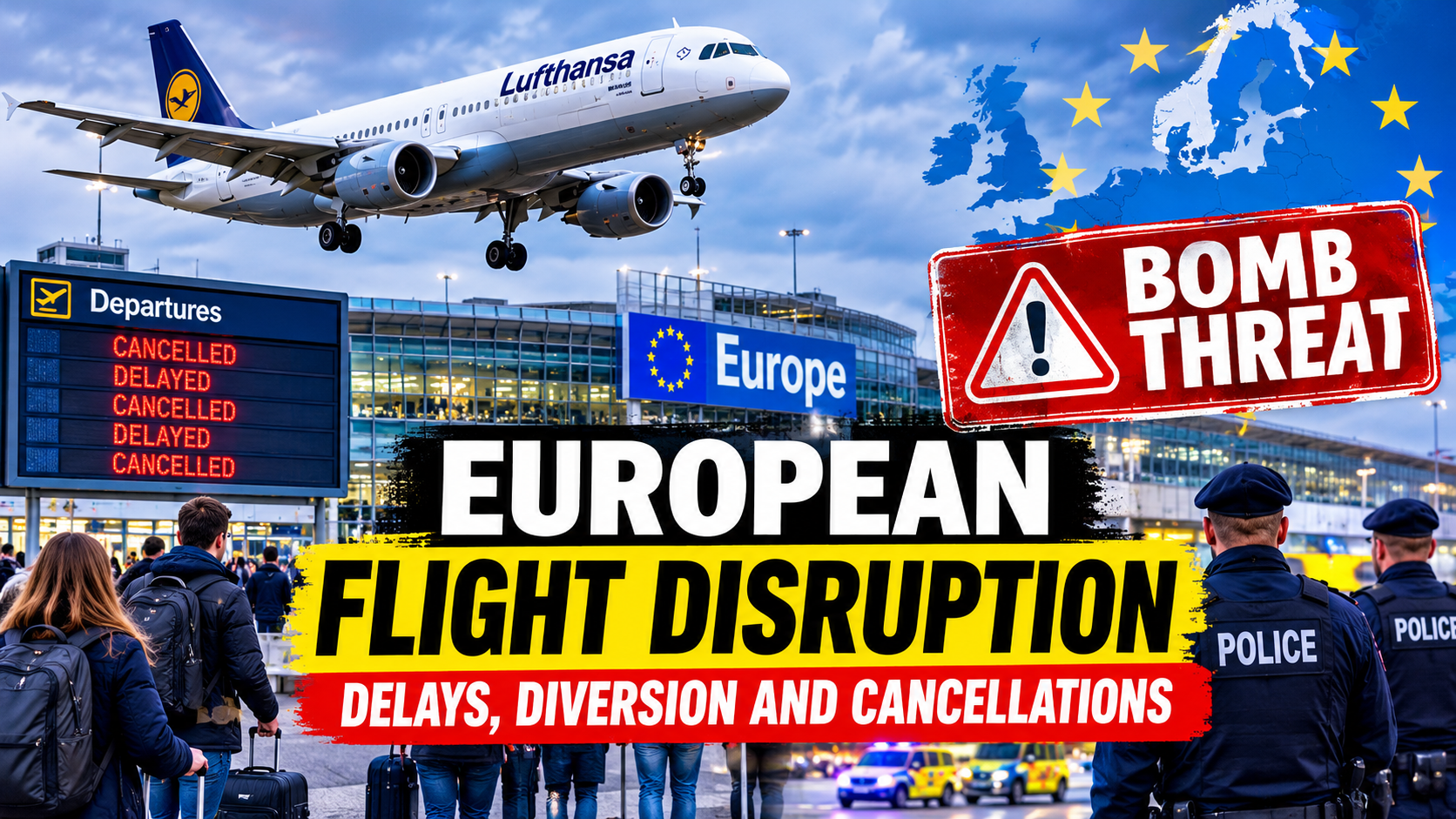
European aviation is facing fresh disruption in November 2026 after a series of bomb threats targeted commercial passenger flights and airports across several countries. The incidents have created concern among travellers, airlines, airport authorities and aviation security agencies. Several flights have reportedly been diverted, delayed or temporarily held while security teams carried out inspections.
According to reports published on November 6, a new wave of threats affected at least 18 flights across Europe on Friday. The incidents involved routes connected to countries including Bulgaria, Czechia, France, Italy, Hungary, Cyprus, Romania, the United Kingdom and Portugal. Fortunately, the affected aircraft landed safely, and security searches did not discover explosives.
The situation has attracted international attention because aviation is one of Europe’s most important transportation networks. Even when threats turn out to be false, airlines must follow security procedures to protect passengers and crew members.
The latest developments demonstrate how security alerts can affect international travel, airport operations and airline schedules.
Why Are Flights Being Disrupted Across Europe?
The main reported reason behind the latest disruption is a series of bomb threats targeting passenger aircraft and aviation facilities.
During the first week of November, several European countries reported suspicious communications involving commercial flights. Authorities responded by coordinating with airlines, airport security teams and aviation agencies.
Some aircraft were diverted to alternative airports, while others received additional security inspections after landing. In certain cases, fighter aircraft were deployed to escort civilian planes as part of precautionary procedures.
According to reports from Reuters and other international news organisations, investigators are examining whether the incidents are connected. However, authorities have not established who is responsible.
These incidents highlight the importance of aviation security and the challenges faced by European authorities when responding to threats that cross national borders.
Countries and Airlines Affected by the Disruptions
The recent incidents have involved multiple European countries and international airlines. The geographical spread has made the situation particularly challenging for aviation authorities.
Some of the countries mentioned in recent reports include:
-
France: Authorities responded to aircraft diversions and security checks.
-
Italy: Flights heading towards Rome were among those affected by security alerts.
-
Czechia: Prague Airport received threats, leading to additional inspections.
-
Hungary: Fighter jets were scrambled to escort civilian aircraft on several occasions.
-
Bulgaria: Several flights faced diversions and precautionary security procedures.
-
United Kingdom: The country was among those mentioned in reports about the wider wave of threats.
-
Romania and Cyprus: Flights connected to these countries were also included in reports of the latest incidents.
Airlines mentioned in reports include Ryanair, Wizz Air, Aer Lingus, Finnair, Aegean Airlines, KLM, LOT Polish Airlines and easyJet.
It is important to understand that these reports do not mean every flight operated by these airlines is affected. The incidents concern particular flights and routes, and airline operations can continue normally elsewhere.
Flight Diversions and Airport Security Checks
Flight diversion is one of the most important consequences of an aviation security alert. When an aircraft receives a serious security warning, the relevant authorities may instruct the airline and flight crew to follow precautionary procedures.
In the recent European incidents, some aircraft were directed towards alternative airports. Security personnel then conducted inspections before allowing normal procedures to continue.
One reported incident involved an Aer Lingus flight travelling from Dublin to Rome. The aircraft was diverted to a French military airfield near Évreux following a threat.
Other incidents involved flights connected to Prague, Helsinki, Vienna, Warsaw and several other European destinations.
Security checks can require additional time and coordination. Passengers may experience uncertainty while waiting for updates, and airlines may need to rearrange aircraft and crew schedules.
Authorities have reported that inspections did not discover explosives in the aircraft involved in these incidents. This is an important development for passengers, although investigations remain ongoing.
How Are European Airports Responding?
European airports are working with national security agencies, police departments and airlines to manage the situation.
Airport authorities must balance two important responsibilities: maintaining passenger safety and keeping airport operations running efficiently.
When a security alert is received, airport teams may need to:
-
Coordinate with relevant security authorities.
-
Review information connected to the reported threat.
-
Arrange aircraft inspections when required.
-
Provide updated information to airlines and passengers.
-
Manage airport movements and possible diversions.
-
Resume normal operations after the relevant checks are completed.
These procedures can affect departure gates, arrival schedules, baggage operations and connecting flights.
Large international airports handle thousands of passengers every day. Even a small number of disrupted flights can create additional pressure when aircraft and passengers are redirected to alternative locations.
However, the current reports do not indicate that all European airports have been closed. Most disruption has been connected to specific security incidents and individual flights.
Impact on Passengers and International Travel
Flight disruptions can create several problems for international travellers.
Passengers travelling between European cities may face unexpected changes to their schedules. People connecting to long-distance international flights could also experience difficulties if their first flight arrives late.
The most common consequences include:
-
Unexpected flight delays.
-
Changes to arrival airports.
-
Missed connecting flights.
-
Longer waiting periods.
-
Changes to baggage arrangements.
-
Additional communication with airline customer-service teams.
Families, business travellers, international students and tourists may all experience difficulties when their travel plans change.
Passengers should follow official airline announcements and airport information rather than relying entirely on social media posts. Information can change quickly during security incidents.
Travellers should also keep their booking information and airline notifications available so they can receive updates about any changes to their journey.
Is European Air Travel Completely Stopped?
No. The latest reports do not indicate a complete shutdown of European air travel.
Although at least 18 flights were reportedly disrupted by the latest wave of threats on November 6, the Guardian reported that these incidents represented approximately 0.0674% of Europe’s 26,709 scheduled flights.
This figure suggests that the disruption affected a relatively small proportion of scheduled flights, even though the incidents attracted considerable attention.
Airlines and airports have continued working to maintain normal services while responding to individual security alerts.
Passengers should therefore distinguish between specific flight disruptions and a continent-wide aviation shutdown.
What Are Aviation Authorities Investigating?
European authorities are investigating the origins, credibility and possible connections between the threats.
One major question is whether the incidents were isolated cases or part of a coordinated campaign targeting European aviation.
Some reports have mentioned possible links to wider geopolitical tensions. However, investigators have not confirmed responsibility or established a connection to a particular government or organisation.
Authorities are also examining the communications used to make the threats and whether different incidents share common characteristics.
The investigations are important because false threats can still create serious disruption, consume security resources and affect public confidence in air travel.
European governments are expected to continue cooperating through security and aviation channels as investigations develop.
European Flight Disruption and the Future of Aviation Security
The November 2026 incidents highlight the importance of strong aviation security systems.
European air travel connects major business centres, tourism destinations and international transport hubs. Millions of people depend on reliable flights for work, education, family visits and holidays.
Security agencies must be prepared to respond quickly to suspicious information while ensuring that unnecessary disruption is minimised.
Airlines also need effective communication systems so passengers receive accurate information during unexpected situations.
Technology, international cooperation and improved information-sharing can all contribute to stronger aviation security.
The latest incidents may encourage European aviation authorities to review existing procedures and strengthen coordination between countries.
However, any long-term changes will depend on the findings of ongoing investigations and decisions made by the relevant authorities.
Conclusion
European flight disruption in November 2026 has become an important international aviation story following repeated bomb threats against commercial aircraft and airports.
Although several flights have experienced diversions, delays and security inspections, the affected aircraft have landed safely, and searches have not identified explosives in the reported incidents.
European authorities continue investigating the threats, while airlines and airports are working to minimise disruption and protect passengers.
The coming days will be important for understanding whether these incidents are connected and what additional security measures may be introduced.
For passengers, the most important step is to check flight information through official airline and airport channels before travelling. European aviation continues operating, but travellers should remain aware of possible schedule changes.