
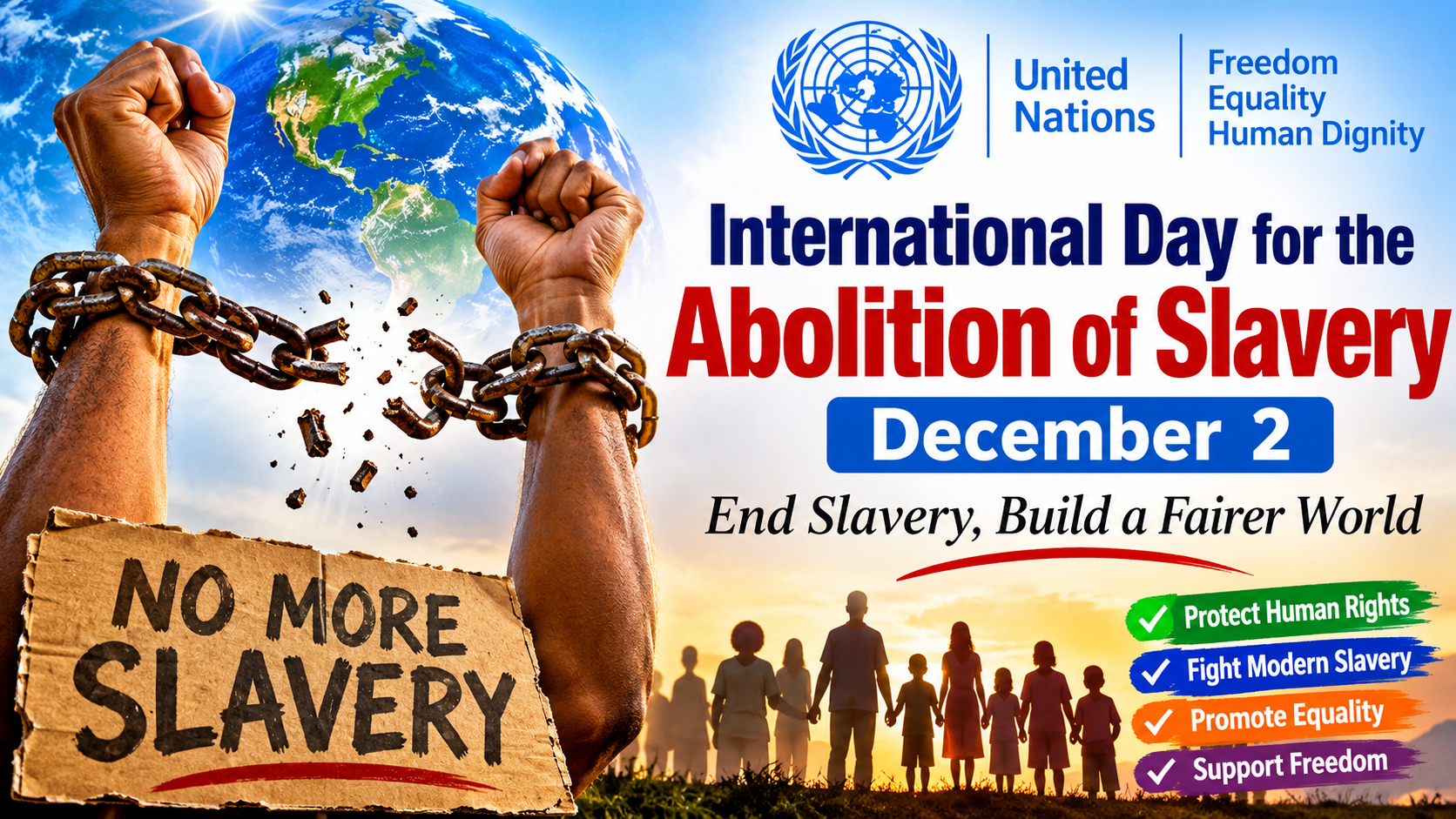
International Day for the Abolition of Slavery 2026: Date, History, Importance and Global Awareness
Contents
International Day for the Abolition of Slavery 2026
The International Day for the Abolition of Slavery is observed every year on December 2 to raise awareness about slavery, human exploitation, human trafficking and other forms of forced labour. This international observance highlights the importance of freedom, equality, dignity and human rights for every person across the world. In 2026, the day will be observed on Wednesday, December 2.
Although slavery has been officially abolished in many countries, different forms of exploitation continue to affect millions of people. Modern slavery can involve forced labour, human trafficking, exploitation of vulnerable workers, forced marriage and other practices that deprive individuals of their freedom and basic rights.
The International Day for the Abolition of Slavery reminds governments, communities, organisations and individuals that the fight against exploitation is not over. Protecting human dignity and ensuring freedom remain important responsibilities for the international community.
What Is the International Day for the Abolition of Slavery?
The International Day for the Abolition of Slavery is a United Nations observance dedicated to promoting awareness of slavery and its modern forms. It encourages people to understand the historical impact of slavery and recognise the continuing challenges associated with exploitation and human trafficking.
The day is connected to the United Nations General Assembly’s adoption of the Convention for the Suppression of the Traffic in Persons and of the Exploitation of the Prostitution of Others and broader international efforts to eliminate slavery-related practices. December 2 is particularly associated with the adoption of the United Nations Convention for the Suppression of the Traffic in Persons and of the Exploitation of the Prostitution of Others in 1949.
The observance also highlights the importance of international laws, social awareness, education and cooperation in preventing people from being exploited.
History of the International Day for the Abolition of Slavery
The history of slavery stretches back thousands of years, affecting societies across different continents and cultures. Historically, enslaved people were denied freedom, forced to work and often treated as property. Slavery caused enormous suffering and created lasting social, economic and cultural consequences.
Over time, abolition movements emerged across the world. Activists, reformers, affected communities and political leaders campaigned against slavery and demanded freedom, equality and legal protection.
The United Nations has played an important role in promoting international human rights standards. The Universal Declaration of Human Rights, adopted in 1948, states that no person should be held in slavery or servitude.
International agreements and legal frameworks have helped countries establish protections against slavery, trafficking and forced labour. However, the implementation of these protections remains a challenge in many parts of the world.
Why Is December 2 Observed?
December 2 is observed as the International Day for the Abolition of Slavery because it marks the adoption of a United Nations convention in 1949 addressing human trafficking and exploitation.
The purpose of this international day is not only to remember the historical abolition of slavery but also to draw attention to modern forms of exploitation that continue to threaten people’s freedom and dignity.
The day encourages governments to strengthen laws, communities to increase awareness and organisations to support people who have experienced exploitation.
Modern Slavery and Its Challenges
Modern slavery remains a serious global human rights concern.
Although traditional slavery has been legally abolished in many countries, modern forms of exploitation continue to exist. These practices can occur in different industries, communities and regions.
Some major forms of modern slavery include:
-
Forced labour: People are compelled to work under conditions they cannot freely leave.
-
Human trafficking: Individuals are recruited, transported or exploited through coercion, deception or abuse of vulnerability.
-
Child exploitation: Children may be forced into harmful labour or other forms of exploitation.
-
Forced marriage: Individuals may be pressured or compelled into marriage without free consent.
-
Debt bondage: People may be trapped in exploitative work arrangements because of debts or unfair conditions.
These practices violate fundamental human rights and can have long-term consequences for individuals, families and communities.
Importance of Human Rights and Global Awareness
The International Day for the Abolition of Slavery highlights the importance of human rights in building a fair and peaceful society. Every individual deserves freedom, safety, equality and the opportunity to live with dignity.
Awareness is important because exploitation can sometimes occur without being immediately recognised. Education, responsible reporting, community support and effective legal systems can help people understand their rights and recognise situations that require protection.
Governments, international organisations, educational institutions and civil society groups can work together to improve protections, support affected individuals and promote safer communities.
How Countries and Organisations Can Fight Modern Slavery
Countries and organisations can take several steps to address modern slavery and human trafficking.
-
Strengthen laws against trafficking, forced labour and exploitation.
-
Improve access to education and employment opportunities.
-
Protect vulnerable individuals and communities.
-
Provide support services for survivors of exploitation.
-
Promote awareness campaigns through schools, communities and media.
-
Encourage international cooperation and responsible business practices.
These efforts can help reduce exploitation and create stronger protections for people at risk.
How People Can Participate in the Observance
People can participate in the International Day for the Abolition of Slavery by learning about human rights, sharing educational information and supporting organisations working to protect vulnerable individuals.
Schools and colleges may organise discussions, awareness programmes, speeches, poster-making activities and educational events. News organisations, bloggers and social media platforms can also share responsible information about the importance of freedom and equality.
Understanding human rights and supporting respectful, safe communities are meaningful ways to contribute to the message of this international observance.
Conclusion
The International Day for the Abolition of Slavery 2026, observed on December 2, is an important international occasion that highlights freedom, dignity, equality and human rights. It reminds the world that although slavery has been legally abolished in many places, modern forms of exploitation remain a serious challenge.
Through education, awareness, international cooperation and stronger protections, societies can work towards a future where every person enjoys freedom and dignity. The observance encourages individuals, governments and organisations to continue supporting the global effort to end slavery and exploitation.