
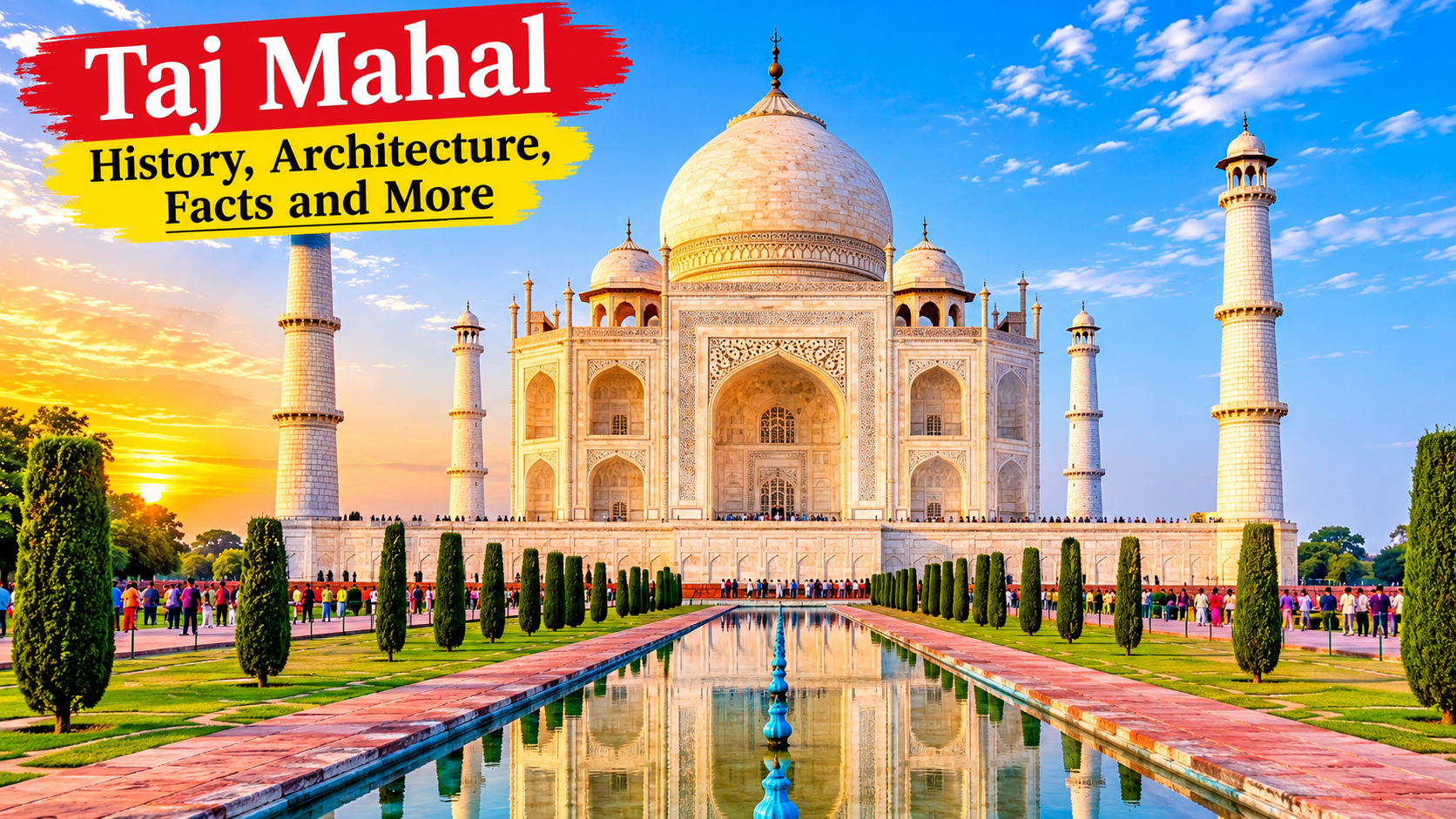
Title: Taj Mahal: History, Architecture, Facts, Location and the Story Behind India’s Symbol of Love
Contents
Meta Description: Discover the fascinating history of the Taj Mahal, its beautiful Mughal architecture, construction, location, interesting facts and why it is one of the world’s most famous monuments.
URL: https://yourwebsite.com/taj-mahal-history
Slug: taj-mahal-history
Focus Keyphrase: Taj Mahal History
Tags: Taj Mahal, Taj Mahal History, Taj Mahal Architecture, Shah Jahan, Mumtaz Mahal, Indian Heritage, Famous Monuments in India, UNESCO World Heritage Site, Agra Tourism, Seven Wonders of the World
Taj Mahal: History, Architecture, Facts, Location and the Story Behind India’s Symbol of Love
Introduction
The Taj Mahal is one of the most famous historical monuments in the world. Located in Agra, Uttar Pradesh, India, this magnificent white marble monument attracts millions of visitors from different countries every year. It is widely recognised as a symbol of love, beauty, and extraordinary architectural design.
Built by Mughal Emperor Shah Jahan in memory of his beloved wife Mumtaz Mahal, the Taj Mahal represents an important chapter in Indian history. Its beautiful white marble structure, impressive domes, detailed artwork, and peaceful gardens make it one of the most remarkable buildings ever constructed.
The Taj Mahal is also recognised as a UNESCO World Heritage Site and is considered one of the New Seven Wonders of the World. Its beauty and historical importance make it an essential destination for tourists, historians, students, and architecture lovers.
History of the Taj Mahal
The history of the Taj Mahal dates back to the 17th century during the Mughal Empire. Mughal Emperor Shah Jahan commissioned this magnificent monument after the death of his wife Mumtaz Mahal in 1631.
Mumtaz Mahal was one of Shah Jahan’s most beloved wives. Her death deeply affected the emperor, and he decided to build a beautiful monument in her memory. The construction of the Taj Mahal began around 1632 in Agra, beside the Yamuna River.
Thousands of skilled workers, architects, craftsmen, and artists participated in its construction. The project involved specialists in marble carving, stone decoration, calligraphy, and other traditional crafts.
The main mausoleum was substantially completed around 1648, while work on the wider complex continued until approximately 1653.
Over time, the Taj Mahal became an important symbol of Mughal architecture and India’s cultural heritage.
Location of the Taj Mahal
The Taj Mahal is situated in Agra, a historic city in the Indian state of Uttar Pradesh. It stands on the southern bank of the Yamuna River.
Agra is well connected to major Indian cities through roads, railways, and air travel. Visitors from Delhi, Jaipur, and other destinations frequently include the Taj Mahal in their travel plans.
The monument is surrounded by beautiful gardens, pathways, water channels, and other historical structures.
Its location beside the Yamuna River adds to its peaceful atmosphere and visual beauty.
Beautiful Architecture of the Taj Mahal
The architecture of the Taj Mahal is one of the main reasons behind its worldwide popularity. It combines elements of Persian, Islamic, Indian, and Mughal architectural traditions.
The entire structure is mainly built using white marble, which gives it a distinctive appearance. The marble surface reflects different shades depending on the sunlight and weather conditions.
Some important architectural features include:
1. Main Dome: The large central dome is one of the most recognisable features of the monument. Its impressive shape creates a balanced and elegant appearance.
2. Four Minarets: Four tall minarets stand around the main mausoleum. They contribute to the monument’s symmetry and architectural beauty.
3. Marble Decorations: Beautiful floral patterns, carved designs, and precious-stone inlay work decorate different sections of the building.
4. Calligraphy: Arabic calligraphy featuring religious inscriptions appears on several parts of the monument.
5. Beautiful Gardens: The surrounding Mughal-style gardens feature pathways, water channels, and carefully arranged green spaces.
These architectural elements demonstrate the extraordinary skills of the craftsmen who worked on the monument.
Why Is the Taj Mahal Called a Symbol of Love?
The Taj Mahal is internationally known as a symbol of eternal love because of the story behind its construction.
Shah Jahan commissioned the monument in memory of Mumtaz Mahal, whose death inspired him to create a lasting memorial.
The monument represents remembrance, dedication, and the emotional connection between two people. Its beauty and historical background have made it one of the most recognised romantic landmarks in the world.
People from different countries visit the Taj Mahal to experience its beauty and learn about the story behind its creation.
Interesting Facts About the Taj Mahal
Here are some interesting facts about this world-famous monument:
- The Taj Mahal is located in Agra, Uttar Pradesh, India.
- It was commissioned by Mughal Emperor Shah Jahan.
- It was built in memory of Mumtaz Mahal.
- Construction began around 1632.
- The main mausoleum was completed around 1648.
- The entire complex was completed around 1653.
- It is primarily constructed from white marble.
- It became a UNESCO World Heritage Site in 1983.
- It was named one of the New Seven Wonders of the World in 2007.
- It attracts visitors from across the world.
These facts highlight the historical, cultural, and architectural importance of the Taj Mahal.
Taj Mahal as a UNESCO World Heritage Site
The Taj Mahal received UNESCO World Heritage Site status in 1983 because of its outstanding cultural and architectural significance.
UNESCO recognises important places that have exceptional value for humanity. The Taj Mahal is considered an extraordinary example of Mughal architecture and artistic achievement.
Its historical importance extends beyond India because it represents an important period in world architectural history.
The recognition also highlights the importance of protecting the monument for future generations.
Tourism and Visitor Experience
The Taj Mahal is one of India’s most popular tourist attractions. Visitors come from different parts of India and abroad to admire its architecture, explore its gardens, and learn about its history.
Many tourists prefer visiting during the early morning because the changing sunlight creates beautiful views of the white marble structure.
Visitors can also explore other historical attractions in Agra, including Agra Fort and Fatehpur Sikri.
Tourism around the Taj Mahal supports local businesses, hotels, restaurants, transport services, and tour guides.
It also plays an important role in promoting India’s cultural heritage internationally.
Visitors should check official entry rules, ticket prices, opening hours, and restrictions before planning their journey because these details may change.
Importance of Protecting the Taj Mahal
Preserving the Taj Mahal is important for India’s history, culture, and tourism industry.
Environmental pollution, changing weather conditions, and heavy visitor activity create challenges for monument conservation.
Government authorities and conservation organisations work to protect the monument and maintain its architectural beauty.
Visitors also have a responsibility to follow rules, avoid damaging historical structures, and keep the surrounding area clean.
Protecting the Taj Mahal ensures that future generations can continue to experience this extraordinary monument.
Conclusion
The Taj Mahal is much more than a beautiful building. It is a remarkable symbol of love, history, culture, and architectural excellence. Built by Shah Jahan in memory of Mumtaz Mahal, it continues to inspire people around the world.
Its white marble structure, magnificent dome, beautiful gardens, and detailed artistic decorations make it one of India’s greatest historical treasures.
As a UNESCO World Heritage Site and one of the New Seven Wonders of the World, the Taj Mahal holds a special place in global history.
Whether someone is interested in history, architecture, photography, or tourism, visiting the Taj Mahal offers an unforgettable experience. Preserving this extraordinary monument is a shared responsibility so that its beauty and historical importance remain alive for generations to come.