
1. Introduction to Lal Qila
Contents
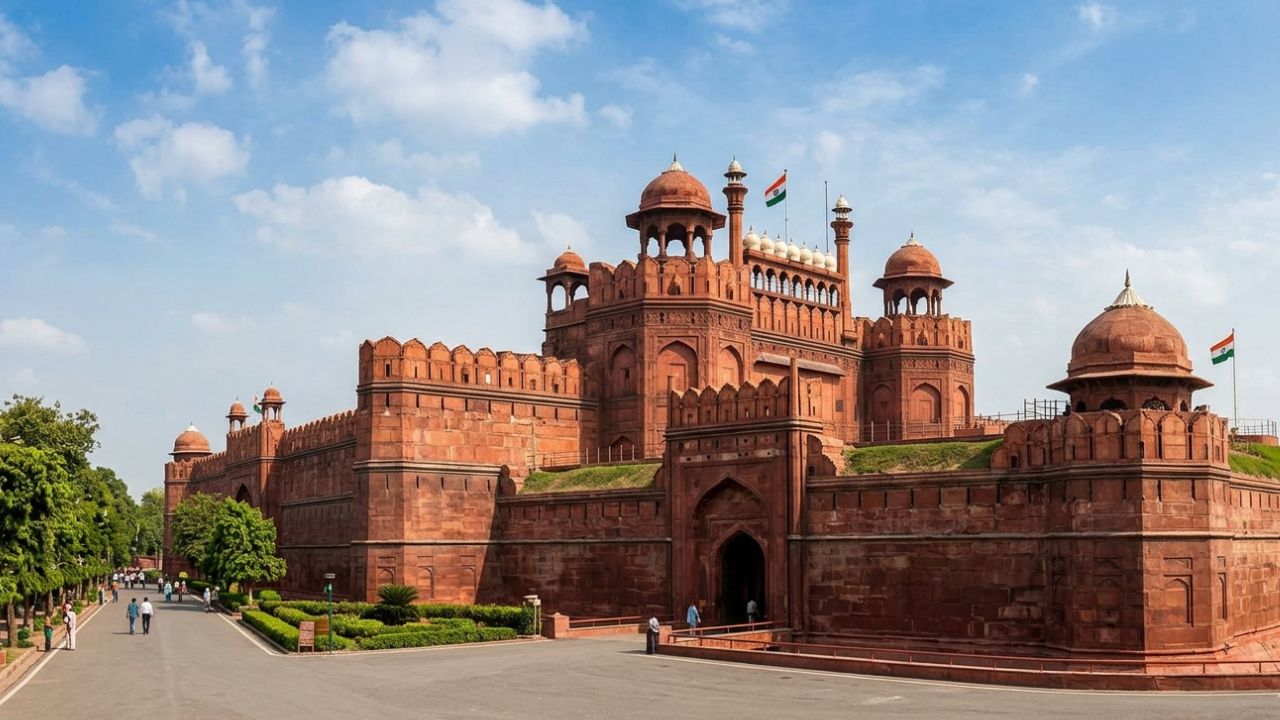
Lal Qila, also known as the Red Fort, is one of India’s most famous historical monuments. Located in Old Delhi, it represents the country’s rich cultural heritage, Mughal architecture, and struggle for independence. The fort attracts tourists, history lovers, students, photographers, and visitors from different parts of the world.
The Red Fort is especially important because the Prime Minister of India hoists the national flag here every year on 15 August, Independence Day. This tradition makes the monument a powerful symbol of India’s freedom, unity, and national pride.
2. History of Lal Qila

The history of Lal Qila dates back to the 17th century. Mughal Emperor Shah Jahan ordered its construction in 1638 when he decided to establish his new capital, Shahjahanabad, in Delhi. Construction continued for approximately ten years, and the fort was completed in 1648.
The monument was built mainly with red sandstone, which gives it its distinctive appearance and explains the name Red Fort. It became the principal residence of Mughal emperors and served as an important centre of political power, administration, and royal life.
The fort witnessed several important events in Indian history. During the 18th century, the Mughal Empire gradually weakened, and the monument experienced invasions and periods of political instability. In 1739, Persian ruler Nader Shah invaded Delhi and plundered many of its treasures.
Following the Indian Rebellion of 1857, British authorities took control of the fort and used parts of the complex for military purposes. After India gained independence in 1947, Lal Qila became an even more important national symbol.
In 2007, UNESCO included the Red Fort Complex on its World Heritage List, recognising its outstanding historical and architectural importance.
3. Architecture of Lal Qila

The architecture of Lal Qila is an excellent example of Mughal artistic achievement. Its design combines Persian, Timurid, Islamic, and Indian architectural traditions.
The fort features massive defensive walls, impressive gateways, royal halls, gardens, decorative carvings, and beautiful marble structures. Its original palace complex was designed to reflect the wealth and authority of the Mughal rulers.
One notable architectural feature is the Nahr-i-Behisht, meaning the Stream of Paradise. This water channel connected several royal pavilions and formed part of the palace’s carefully planned design.
The fort’s large courtyards and decorated interiors demonstrate the importance of craftsmanship during the Mughal period. Even today, visitors can observe the artistic details that make Lal Qila one of India’s most significant architectural landmarks.
4. Major Attractions Inside Lal Qila

Lahori Gate
The Lahori Gate is the fort’s best-known entrance. It is particularly significant during Independence Day celebrations, when the national flag is hoisted from the fort’s ramparts.

Diwan-i-Aam
This Hall of Public Audience was where the emperor received visitors and heard petitions. Its design reflects the formal administrative traditions of the Mughal court.
Diwan-i-Khas
The Hall of Private Audience was used for important royal meetings. Its marble architecture and decorative details demonstrate the refinement of Mughal craftsmanship.

Rang Mahal
Known as the Palace of Colours, Rang Mahal formed part of the royal residential complex. It offers insight into the lifestyle and artistic tastes of the Mughal royal household.

Chhatta Chowk
This historic covered market near the entrance reflects the commercial and cultural life associated with the fort. Visitors can explore nearby shops selling handicrafts and souvenirs.
These attractions help visitors understand how the fort functioned as a royal residence and administrative centre.
5. Lal Qila and India’s Independence Day
Lal Qila holds a special place in the history of modern India. On 15 August 1947, India became independent from British rule, beginning a new chapter in the country’s history.
Since independence, the Red Fort has been the principal venue for the national Independence Day ceremony. Every year, the Prime Minister hoists the national flag and addresses the nation from the fort’s ramparts.
The ceremony honours the sacrifices made by freedom fighters and reminds citizens of the values of freedom, democracy, unity, and national responsibility. Millions of people follow the event through television and digital media.
For these reasons, Lal Qila is not simply a historical monument. It is also a living symbol of India’s national identity.
6. Lal Qila as a UNESCO World Heritage Site
The Red Fort Complex received UNESCO World Heritage status in 2007. This recognition highlights its architectural innovation, cultural importance, and role in major historical events.
The site includes the Red Fort and the adjoining historic Salimgarh Fort. Its architecture illustrates the combination of different cultural influences that developed during the Mughal period.
World Heritage status also highlights the importance of protecting historical buildings for future generations. Conservation work, responsible tourism, and public awareness are essential to preserving the monument’s original features and historical value.
7. Best Time to Visit Lal Qila
The cooler months from October to March are generally comfortable for exploring Delhi’s outdoor historical attractions. Morning visits can be useful for walking around the complex before the day becomes hotter.
Visitors should check official information before travelling because opening arrangements, security restrictions, ticket prices, and special-event schedules can change.
According to India’s official tourism portal, the usual visiting hours have been listed as 9:30 AM to 4:30 PM. However, a February 2026 report confirmed that the fort’s weekly Monday closure had been removed, allowing visits throughout the week. Check current arrangements before your visit.
8. How to Reach Lal Qila
Lal Qila is located in Old Delhi and can be reached using several forms of transport.
-
Metro: Delhi Metro is a convenient way to travel to the Old Delhi area. Check the current route and nearest operating station before departure.
-
Road: Taxis, auto-rickshaws, and other local transport services can take visitors to the surrounding area.
-
Railway: Travellers arriving by train can use local transport or the metro to reach the monument.
-
Nearby attractions: Jama Masjid and Chandni Chowk are popular places to explore during the same trip.
Because Old Delhi can become crowded, planning transport and allowing enough time for security checks can make the visit easier.
9. Importance of Lal Qila for Tourism
Lal Qila contributes to India’s heritage tourism by attracting domestic and international visitors. It offers educational opportunities for students studying Indian history, architecture, and cultural development.
Tourism also supports local shops, guides, transport providers, and other businesses. At the same time, visitors should respect the monument, follow site regulations, avoid littering, and protect historic structures.
Responsible tourism helps balance public access with the long-term preservation of this important cultural landmark.
10. Conclusion
Lal Qila is one of the most remarkable monuments in India. Built under Mughal Emperor Shah Jahan, it reflects centuries of architectural achievement and major changes in the country’s political history. Its red sandstone walls, royal halls, historic gateways, and connection with Independence Day make it an essential destination for anyone interested in India’s heritage.
As a UNESCO World Heritage Site and a symbol of national pride, the Red Fort connects India’s past with its present. Preserving Lal Qila is an important responsibility that helps ensure future generations can learn from and appreciate the country’s rich history.
Whether you are a tourist, student, history enthusiast, or travel blogger, Lal Qila offers a valuable opportunity to explore India’s cultural identity and historical legacy.