
Introduction
Contents
Kaziranga National Park is one of the most famous wildlife destinations in India. Located in the northeastern state of Assam, the park is internationally recognised for its rich biodiversity, beautiful natural landscapes and successful wildlife conservation efforts. It is especially famous for the Indian one-horned rhinoceros, making it a popular destination for wildlife lovers, photographers, nature enthusiasts and tourists from around the world.
The park lies in the floodplains of the mighty Brahmaputra River and includes extensive grasslands, wetlands, forests and water bodies. These natural habitats support a wide variety of animals and birds. Kaziranga was declared a UNESCO World Heritage Site in 1985 because of its exceptional natural importance.
1. Location and History of Kaziranga National Park
Kaziranga National Park is situated across parts of the Golaghat, Nagaon and Sonitpur districts of Assam. Its landscape is closely connected to the Brahmaputra River, which influences the region’s soil, vegetation and wildlife habitats.
The conservation history of Kaziranga dates back to the early twentieth century. Protection measures were introduced to safeguard the rhinoceros and other wildlife from hunting and habitat loss. Over time, the protected area developed into one of India’s most important wildlife conservation destinations.
The park was designated a national park in 1974 and received UNESCO World Heritage recognition in 1985. It is also a designated tiger reserve, highlighting its importance for protecting large predators and maintaining ecological balance
2. The Famous One-Horned Rhinoceros

The Indian one-horned rhinoceros is the most recognisable animal of Kaziranga National Park. Its large body, thick folded skin and single horn make it distinctive among the world’s rhinoceros species.
Kaziranga is one of the most important strongholds of this endangered species and supports the largest population of Indian one-horned rhinoceroses. Conservation efforts, habitat protection and anti-poaching measures have played an important role in the species’ recovery.
The rhinoceros is also an important symbol of Assam’s natural heritage. Its presence attracts visitors and helps raise awareness about wildlife protection. Protecting the species requires continued conservation work, scientific monitoring and cooperation between local communities and wildlife authorities.
3. Wildlife and Biodiversity
Kaziranga is home to a remarkable variety of mammals, reptiles, fish and birds. Although the rhinoceros is its most famous resident, the park’s ecological importance extends far beyond one species.
Other notable wildlife includes:
-
Royal Bengal tiger: A major predator that helps maintain the ecological balance.
-
Asian elephant: Frequently associated with the park’s grasslands and forested areas.
-
Wild water buffalo: An important large mammal found in the region.
-
Eastern swamp deer: A deer species adapted to wet grassland habitats.
-
Hog deer and sambar: Herbivores that form part of the local food web.
-
Leopards and other smaller mammals: Important members of the park’s diverse ecosystem.
The wetlands and grasslands also provide habitats for numerous resident and migratory bird species. Visitors may encounter different kinds of storks, ducks, eagles and other wetland birds, depending on the season and location.
4. Grasslands, Wetlands and Natural Beauty

One of the most remarkable features of Kaziranga is its diverse natural environment. The park contains tall alluvial grasslands, shallow pools, wetlands, river channels and patches of deciduous and semi-evergreen woodland.
The Brahmaputra River plays a major role in shaping this landscape. Seasonal flooding brings water and nutrients to the floodplains, helping maintain the ecosystem. At the same time, floods can displace wildlife and create challenges for conservation and nearby communities.
The scenic surroundings, changing seasons and rich biodiversity make Kaziranga an important destination for nature photography, environmental education and ecological research.
5. Safari Experience at Kaziranga
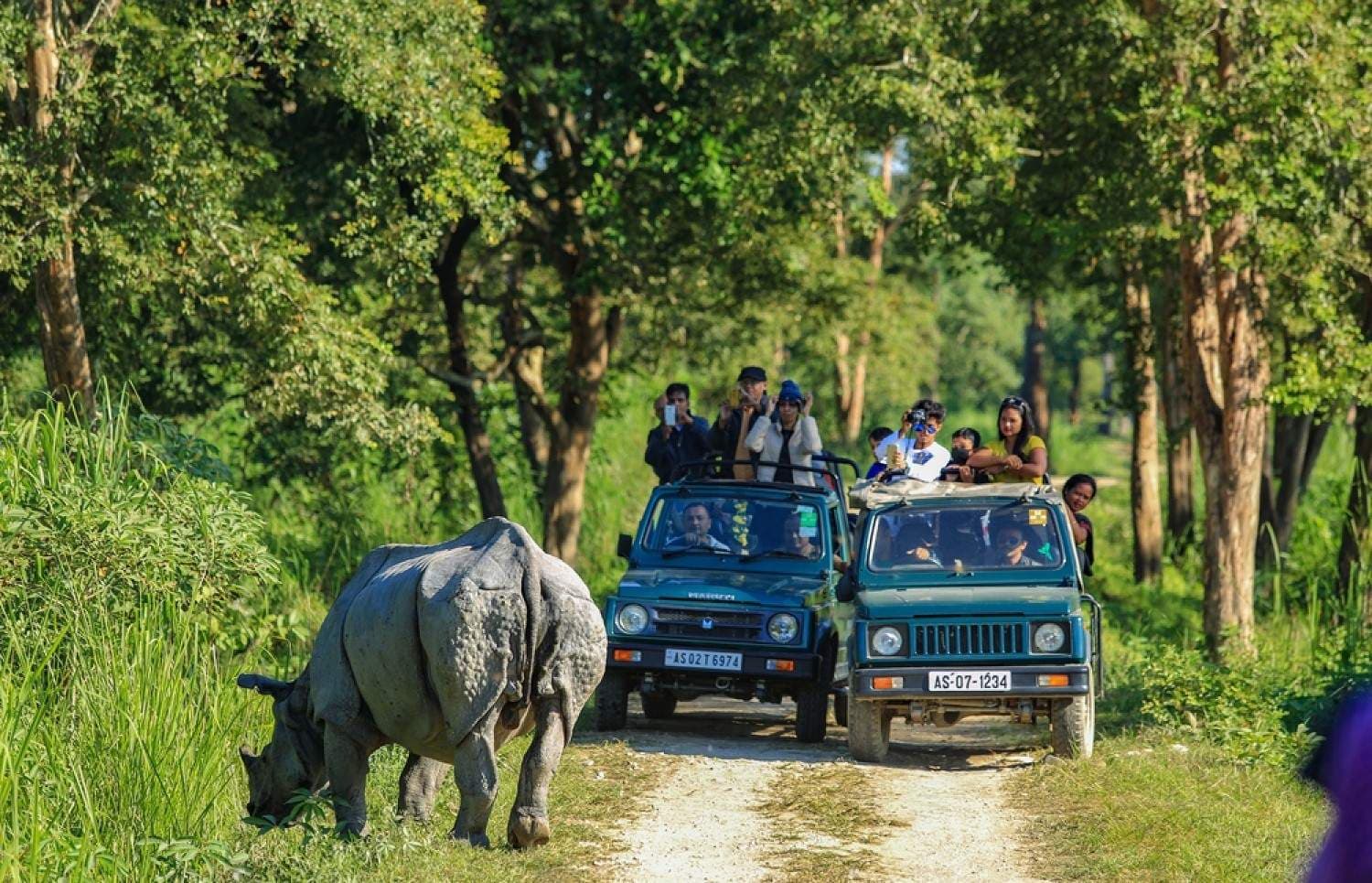
Wildlife safaris are among the most popular activities at Kaziranga National Park. Visitors can explore designated areas with authorised operators and observe animals in their natural surroundings.
Jeep safaris offer an opportunity to travel through permitted routes and explore different habitats. Wildlife sightings are never guaranteed, as animals move freely throughout the park.
Kaziranga has several recognised tourism ranges, including:
-
Central Range (Kohora): A well-known visitor entry point.
-
Western Range (Bagori): Popular with wildlife visitors.
-
Eastern Range (Agaratoli): Known for wetlands and birdlife.
-
Burapahar Range: Offers forested landscapes and varied habitats.
-
Northern Range: Provides access to areas on the northern side of the Brahmaputra region.
Safari availability, opening dates, routes and entry rules may vary. Visitors should check current instructions from official park authorities before planning their trip.
6. Best Time to Visit Kaziranga National Park
The period from November to April is generally considered a good time to visit Kaziranga. During these months, visitors can enjoy pleasant weather and explore the park when tourism activities are operating.
Winter is especially attractive for birdwatching because migratory birds visit the region. From late winter into early spring, the grasslands and surrounding landscapes can provide excellent opportunities for wildlife observation and photography.
The monsoon season brings heavy rainfall to Assam. Flooding can affect wildlife habitats, roads and tourism operations, and the park may close some or all visitor areas during parts of this period.
Before travelling, check the official tourism website for current safari dates, weather conditions and entry arrangements.
7. How to Reach Kaziranga National Park
Kaziranga is accessible by road from several towns and cities in Assam. Kohora is a major tourist hub and a convenient base for visitors exploring the park.
By air: Guwahati and Jorhat are useful airport options. From either city, travellers can continue by road to the park.
By train: Visitors can travel by train to Guwahati or Jorhat and arrange onward road transport. Check current railway routes and the nearest suitable station before booking.
By road: Buses, taxis and private vehicles can reach the Kaziranga area using the road network connecting Guwahati, Tezpur, Bokakhat and Jorhat.
Travel times depend on traffic, weather and the starting point. Booking accommodation in advance is advisable during busy tourist periods.
8. Importance of Kaziranga for Assam Tourism
Kaziranga National Park is an important part of Assam’s tourism industry. It attracts domestic and international visitors, supports tourism-related businesses and creates opportunities for local guides, drivers, accommodation providers and other workers.
The park also introduces visitors to the natural and cultural heritage of Assam. Travellers can combine a wildlife visit with experiences such as exploring nearby tea gardens, discovering local food and learning about regional traditions.
Responsible tourism can support conservation when visitors follow park rules, use authorised services and respect wildlife habitats. Tourism should not disturb animals or damage the environment.
9. Conservation Challenges
Despite its achievements, Kaziranga faces several conservation challenges. Poaching, habitat changes, invasive species, riverbank erosion and human-wildlife conflict require continued attention. Seasonal floods can also force animals to move towards higher ground outside their usual habitats.
Road traffic near wildlife corridors creates additional risks, particularly when animals move across surrounding areas. Long-term protection requires effective habitat management, scientific research, wildlife monitoring and cooperation between government authorities and local communities.
Visitors also have a responsibility to protect the park by avoiding littering, keeping a safe distance from animals and following the instructions of trained guides and forest staff.
10. Travel Tips for Visitors
Keep the following tips in mind when planning a trip:
-
Check official park opening dates and safari availability before travelling.
-
Carry a valid identification document if required for entry.
-
Wear comfortable clothing suitable for outdoor activities.
-
Follow your guide’s instructions throughout the safari.
-
Never feed, chase or attempt to touch wild animals.
-
Avoid loud noises and dispose of waste responsibly.
-
Respect local communities and the natural environment.
A visit to Kaziranga is most rewarding when it combines wildlife observation with an understanding of conservation.
Conclusion
Kaziranga National Park is one of India’s most valuable natural treasures. Its famous one-horned rhinoceroses, diverse wildlife, beautiful grasslands and wetlands make it a remarkable destination in Assam. Its UNESCO World Heritage status reflects its international importance for nature conservation.
Beyond tourism, Kaziranga demonstrates how sustained conservation efforts can help protect threatened wildlife and preserve natural habitats. However, continued work is essential to address poaching, flooding-related risks, habitat pressures and human-wildlife conflict.
For anyone interested in wildlife, biodiversity, photography or nature tourism, Kaziranga National Park offers an opportunity to experience the natural beauty of Northeast India while learning why protecting wildlife matters.